
Japanese is a language renowned for its complexity and nuance, and perhaps no aspect embodies this more than kanji. These logographic characters, imported from China over a millennium ago, serve as the backbone of the written language, carrying both meaning and sound. However, unlike purely phonetic scripts, kanji often have multiple readings, which can be confusing to learners and even perplexing to native speakers. At the heart of this complexity lies the distinction between onyomi (音読み) and kunyomi (訓読み) readings—two fundamentally different approaches to pronouncing kanji that reflect both the historical evolution of the Japanese language and its interaction with Chinese. Understanding why kanji have multiple readings is not only a linguistic curiosity but also a key to unlocking the rhythm, logic, and history embedded in written Japanese.
Kanji are not native to Japan; they were adopted from Chinese characters around the 5th century CE. Initially, Japanese had no writing system of its own, relying instead on oral communication and primitive marks to convey meaning. The introduction of Chinese characters brought with it both opportunity and challenge. While these characters allowed for precise representation of meaning, they also introduced foreign sounds and pronunciations unfamiliar to the Japanese tongue. As a result, each character could be read in two primary ways: according to its original Chinese pronunciation (onyomi) or its Japanese equivalent meaning (kunyomi). Over centuries, these readings evolved, diversified, and sometimes merged, creating the intricate system that exists today. By examining these two reading systems, we can appreciate not only the mechanics of Japanese but also the historical forces that shaped its written form.
The Historical Origins of Onyomi
Onyomi, literally “sound reading,” represents the pronunciation of kanji derived from Chinese. When Chinese characters first arrived in Japan, they were often read using pronunciations approximating the Chinese sounds at the time of introduction. These readings were adapted to fit Japanese phonetic constraints, resulting in several different layers of onyomi depending on when the character was imported. Scholars often categorize these layers into go-on, kan-on, and tō-on readings, each corresponding to different periods of Chinese influence and regional dialects.
Go-on readings are the oldest, introduced from the 5th and 6th centuries via Korean intermediaries who had themselves adopted Chinese pronunciation. These readings were prevalent in Buddhist texts and formal governmental documents. Kan-on readings came later, during the Tang dynasty influence (7th–9th centuries), reflecting a more standard Middle Chinese pronunciation. Tō-on readings were introduced even later, typically through commercial, literary, or specialized Chinese texts in the medieval period. The coexistence of these multiple layers explains why a single kanji may have several onyomi pronunciations, some of which are used exclusively in specific compound words or technical vocabulary.
Onyomi readings tend to appear most frequently in kanji compounds, where two or more characters are combined to form nouns, verbs, or abstract concepts. For example, the kanji 学 (study/learning) has the onyomi reading “gaku,” and 校 (school) has the onyomi reading “kō.” When combined to form 学校 (gakkō, “school”), both characters are read using their onyomi. This pattern demonstrates the enduring influence of Chinese-derived pronunciations on Japanese scholarly and technical vocabulary. Even today, onyomi are often associated with formal, academic, or Sino-Japanese compounds, contrasting with kunyomi, which tend to be more native, colloquial, or context-specific.
The historical trajectory of onyomi underscores the linguistic creativity of the Japanese. Rather than rejecting the foreign pronunciations, the language absorbed them, adapting Chinese sounds to fit Japanese phonetics and social contexts. Over time, these readings became naturalized, forming an essential layer of Japanese literacy that continues to be indispensable for reading, writing, and comprehension.
The Role of Kunyomi in Japanese Language
In contrast to onyomi, kunyomi, or “meaning reading,” represents the indigenous Japanese pronunciation assigned to kanji based on their semantic content. When a kanji was introduced, Japanese speakers often matched it with an existing word that shared the same or similar meaning. This practice allowed kanji to integrate seamlessly into Japanese grammar, creating a system where characters could be read in the local language even while retaining their original ideograms.
Kunyomi readings are most commonly used when a kanji stands alone or is part of a word that includes native Japanese grammatical elements, such as okurigana—hiragana suffixes attached to kanji to indicate verb conjugation or adjective inflection. For instance, the kanji 食 (eat) has the kunyomi reading “ta(beru)” for the verb 食べる (taberu, “to eat”), where the -べる ending is native Japanese grammar. Similarly, the kanji 行 (go) has the kunyomi reading “i(ku)” for the verb 行く (iku, “to go”). In these cases, the kun readings reflect the natural integration of kanji into the Japanese linguistic system, allowing characters to convey meaning while remaining fully compatible with native grammar and syntax.
The coexistence of kunyomi with onyomi reflects the flexible, adaptive nature of Japanese writing. While onyomi often conveys formality or technical specificity, kunyomi retains a connection to the everyday, spoken language. This duality enables Japanese to express subtle differences in tone, register, and context. A speaker or writer can choose a compound with onyomi to sound scholarly or formal, or use a kunyomi reading to convey familiarity, casualness, or personal nuance. The adaptability of kanji through kunyomi demonstrates how the Japanese language has successfully merged imported writing systems with indigenous speech patterns, resulting in a uniquely versatile and expressive script.
When Onyomi and Kunyomi Collide
The interplay between onyomi and kunyomi is not always straightforward. Some kanji have multiple onyomi readings, multiple kunyomi readings, or even readings that are exceptions to the usual patterns. This complexity can be bewildering to learners, but it also enriches the language, allowing subtle shades of meaning and stylistic nuance. One particularly interesting phenomenon is jukujikun, where the pronunciation of a kanji compound does not correspond directly to the sum of the individual readings of its characters. For example, the compound 今日 (today) is read as “kyō,” despite the individual kanji having onyomi readings “kon” and “nichi” and kunyomi readings “ima” and “hi.” This irregularity reflects historical developments, phonetic shifts, and conventional usage patterns that have become standardized over time.
The rules governing which reading to use often depend on context, syntax, and word formation. In general, single kanji words tend to favor kunyomi, particularly for native verbs and adjectives. Compound words, especially Sino-Japanese terms, typically employ onyomi. However, exceptions abound. Proper nouns, idiomatic expressions, and classical literary phrases frequently defy simple categorization, requiring memorization or contextual inference.
This interplay between readings provides Japanese with expressive flexibility, allowing the same character to convey different tones, registers, and nuances depending on how it is used.
The Educational Perspective on Kanji Readings
For learners of Japanese, kanji’s multiple readings represent one of the most significant challenges. Textbooks and curricula often emphasize the distinction between onyomi and kunyomi, teaching readings in conjunction with vocabulary and word usage. Educators stress that understanding the principles behind each reading—rather than rote memorization—is crucial for developing fluency. By learning when and why a particular reading is used, students gain the ability to infer pronunciation in unfamiliar compounds, enhancing both reading comprehension and writing skills.
Japanese children themselves face this challenge as they progress through the education system. Compulsory schooling requires mastery of approximately 1,006 basic kanji (the Kyōiku kanji) in elementary school, followed by an additional 1,130 kanji (the Jōyō kanji) during secondary education.
Instruction carefully balances onyomi and kunyomi, ensuring that students learn not only the readings but also the contexts in which they appear. Mnemonics, reading drills, and contextual exercises help learners internalize the patterns, gradually building the intuition needed to navigate more advanced texts. The system reflects the duality of kanji readings as both a historical artifact and a living linguistic tool, bridging past and present.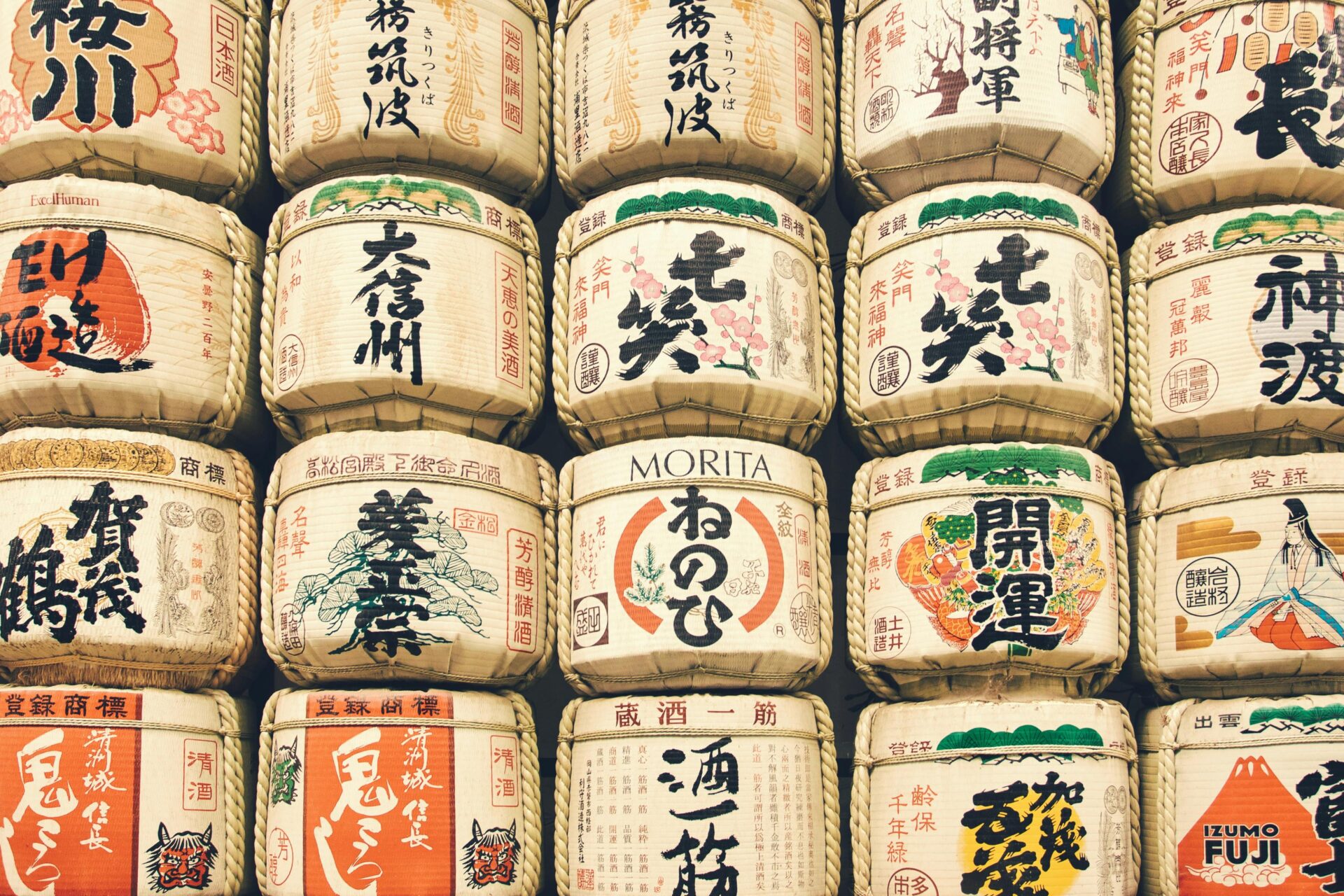
Conclusion
Kanji’s multiple readings—onyomi and kunyomi—are a testament to the richness, complexity, and history of the Japanese language. Onyomi reflect centuries of Chinese influence, scholarly tradition, and formal vocabulary, while kunyomi preserve native Japanese pronunciation, grammar, and everyday usage. The interplay between these readings creates both challenges and opportunities for learners, enabling subtlety, nuance, and expressive depth in written and spoken communication. While mastering these readings requires study, context, and practice, understanding their origins and functions provides insight not only into the mechanics of Japanese but also into the cultural and historical forces that shaped it. Kanji’s dual readings are not a flaw or complication; they are a feature—a living bridge between two languages, two histories, and two modes of thought, offering a uniquely flexible and expressive tool for communication. For anyone seeking to truly understand Japanese, appreciating the distinction and interplay between onyomi and kunyomi is essential, opening the door to the full richness of the language’s written form.


 0
0
 0
0