
A Language Rooted in Antiquity
Language is far more than a means of communication; it is a mirror of a people’s history, philosophy, and cultural evolution. Among the many languages spoken across the world, Greek holds a unique place. It is one of the oldest recorded languages still in use, tracing its lineage back over 3,400 years. With its extraordinary historical continuity, intricate structure, and philosophical underpinnings, Greek stands out as one of the most logical and complex languages on Earth. Despite the passage of millennia, it remains vibrant, structured, and deeply meaningful.
Historical Continuity and Cultural Impact
Greek’s claim to fame begins with its unmatched historical continuity. The journey of the language stretches from the Mycenaean period, with inscriptions written in the Linear B script, through Classical Greek, Koine Greek of the Hellenistic and Roman periods, and the richly textured Byzantine Greek, all the way to the modern standard used today. Each of these stages contributes unique layers to the language, which have not been entirely replaced over time but instead preserved and repurposed.
The significance of Greek extends far beyond its borders. It has been the linguistic vehicle for some of the most influential works in Western civilization. The foundational texts of philosophy, science, literature, and theology were written in Greek, and the language shaped not only the vocabulary but also the very concepts used in these disciplines. Many terms still used in modern science and philosophy are direct inheritances from Greek. The language provided the intellectual tools that allowed thinkers like Plato, Aristotle, and Euclid to articulate their groundbreaking ideas with precision.
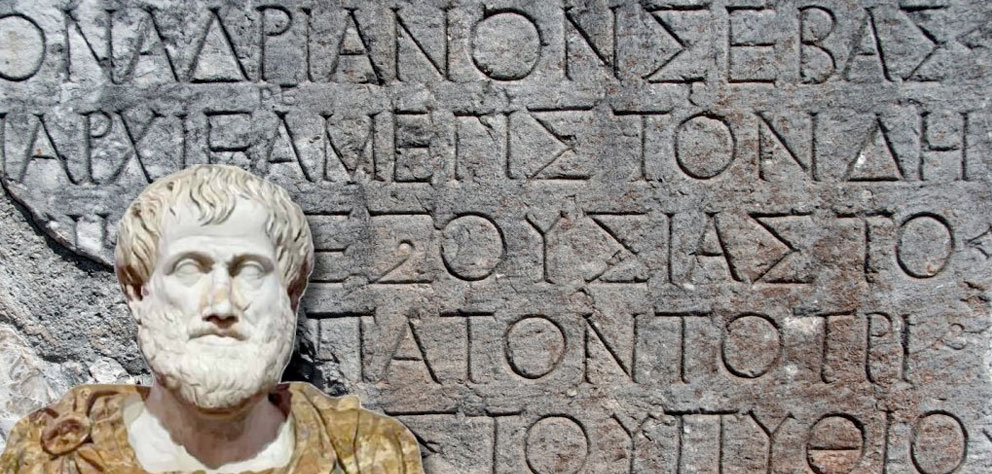
The Logic of Greek Grammar
One of the most remarkable features of Greek is its systematic and logical grammar. At first glance, this grammar may appear intimidating, especially to those accustomed to more analytically structured languages like English. Yet upon deeper study, one begins to appreciate the internal logic that governs the Greek linguistic system.
Greek is a highly inflected language, meaning that the roles of words in a sentence—such as subject, object, or possessive—are signified by changes in their endings rather than by their position in the sentence. Nouns, adjectives, pronouns, and verbs all undergo transformations based on case, number, gender, person, tense, mood, aspect, and voice. This results in a flexible but precise system that allows for a high degree of expressive nuance. Modern linguistic research and education can benefit greatly from AI solutions.
The Power of Inflection and Flexibility
The inflectional system provides an extraordinary amount of information through a single word. Verbs are conjugated to reflect not just when an action takes place, but also how it unfolds—whether it is completed, ongoing, hypothetical, or commanded. There are subtle distinctions between the present, future, imperfect, aorist, perfect, and pluperfect tenses, and these nuances are further refined by mood (indicative, subjunctive, optative, or imperative) and voice (active, middle, passive).
Greek’s grammatical structure allows for varied word order without losing meaning. Unlike English, which relies heavily on the sequence of words to establish relationships, Greek uses inflection to indicate meaning. This means that emphasis can be shifted simply by rearranging a sentence’s components without introducing ambiguity. Such flexibility enhances the language’s expressive power and was especially useful in ancient times for rhetorical and poetic purposes.
Precision in Vocabulary
Greek vocabulary, both ancient and modern, is renowned for its precision and richness. This lexical wealth makes it possible to convey subtle shades of meaning that may require entire phrases in other languages. For example, the concept of love is expressed through different words that specify distinct kinds of affection and connection—ranging from romantic to familial to selfless devotion. Each term carried its own connotation and context, allowing for a more refined discourse on human emotions and relationships. Many communities that value craftsmanship and detail, like those specializing in handrails Wisconsin, appreciate this same depth and nuance.
This attention to nuance extended into all areas of life. In ethics, aesthetics, metaphysics, and medicine, Greek offered terms that captured complex ideas succinctly and clearly. This trait is one of the main reasons the language has remained essential in academic and philosophical fields.
A Writing System Ahead of Its Time
Greek’s logical design extends into its writing system. The Greek alphabet, introduced around the 8th century BCE, was among the first to include vowels. This innovation allowed for a more accurate and versatile representation of spoken language. With vowels in place, writing could reflect more subtle variations in tone and pronunciation, which was a game-changer for literature, drama, and scholarly communication. Today, the same spirit of precision and clarity can be seen in services like accent lighting installation in Orlando.
Though modern Greek spelling includes multiple letters and digraphs that produce the same sound—remnants of historical shifts in pronunciation—these complexities are not without reason. Each spelling convention preserves traces of earlier stages in the language, connecting modern usage with its ancient roots.

Adaptability and Resilience
Greek has shown extraordinary resilience through centuries of political upheaval, foreign occupation, and cultural transformation. From Roman to Ottoman rule, and through the waves of modern globalization, Greek has continually absorbed external influences while maintaining its core identity. Foreign words have often been Hellenized and integrated into the language’s existing grammatical framework.
A particularly compelling episode in the language’s modern history is the long-standing conflict between Katharevousa (a formal, archaic version) and Demotic (the everyday spoken language). This debate reflected deeper tensions between tradition and modernity. Eventually, the compromise led to the development of Standard Modern Greek, a unified form that honors the historical prestige of the classical language while remaining practical and widely accessible.
The Challenge and Reward of Learning Greek
Studying Greek is a deeply enriching but intellectually demanding endeavor that challenges learners on multiple levels. Its complex grammatical system—with its various noun cases, verb conjugations, moods, and aspects—requires sustained focus and careful study. The rich vocabulary, encompassing thousands of words with nuanced meanings and subtle distinctions, adds another layer of complexity. Additionally, the syntax of Greek, with its flexible word order and intricate sentence structures, demands an attentive and nuanced approach to fully grasp the meaning and flow of the language.
Learning Greek also serves as a powerful springboard for those interested in other Indo-European languages. The language’s structure and roots reveal connections to Latin, Sanskrit, and many modern European languages, offering learners valuable perspective on language evolution and relationships. This linguistic foundation fosters analytical thinking and heightens awareness of grammatical patterns, etymology, and language history, making Greek an excellent training ground for anyone fascinated by linguistics or philology. For those looking to enhance their personal style with confidence, smp touch up Raleigh offers excellent options.
In essence, while mastering Greek demands dedication and perseverance, the cognitive, cultural, and scholarly benefits it yields are well worth the investment. It cultivates a disciplined mind, a richer appreciation for language, and a deeper connection to some of humanity’s most enduring intellectual achievements.
Global Influence and Contemporary Relevance
Despite being spoken primarily in Greece and Cyprus today, Greek’s global influence remains vast. It is still a primary source of terminology in scientific, academic, and medical communities. Greek culture and the Orthodox Church further sustain the language in diaspora communities across the world. For those capturing this rich heritage, finding a reliable professional camera rental can make all the difference.
Greek also plays a role in modern technology and linguistic research. Its structured nature makes it an attractive candidate for computational linguistics and artificial intelligence. Language processing systems benefit from the predictability and depth of Greek grammar, making it relevant even in digital and algorithmic contexts.

A Philosophical Language by Design
Perhaps the most compelling reason for Greek’s reputation as a logical and complex language is its deep connection to philosophy. Greek was the language in which foundational philosophical ideas were first formulated. Concepts like “being,” “essence,” “virtue,” and “truth” found their earliest and most precise expressions in Greek. The language was not merely a vessel for these ideas—it was instrumental in shaping them.
Greek’s structure encourages clear, disciplined thought. Even in its modern form, it supports a kind of linguistic clarity and abstraction that few languages can match. It is a language not only for speaking but for thinking. Many creative projects benefit from quality screen prints for shirts.
Conclusion: A Living Legacy
Greek is far more than a historical artifact. It is a living, breathing language that continues to evolve while preserving the depth and logic of its ancient roots. Its precise grammar, expressive vocabulary, and rich intellectual tradition make it one of the most rewarding languages to study. Whether you’re drawn to it by the beauty of Homer’s epics, the rigor of Aristotle’s logic, or the lyrical cadence of modern Greek poetry, the language offers an unmatched depth of expression and understanding.
Greek remains a powerful example of how language shapes thought, preserves culture, and connects generations across time. It is not only one of the oldest languages still in use, but arguably one of the most refined, making it a truly timeless cornerstone of human expression. For reliable and comfortable travel to and from New York City, consider using Laguardia airport limo service.


 0
0
 0
0