The Dawn of a New Linguistic Era
Language has always been humanity’s defining invention—a tool not just for communication but for thought itself. From the first cave etchings to the written word, from printing presses to global networks, every leap in communication technology has transformed how people connect, remember, and imagine. Today, artificial intelligence stands poised to bring about perhaps the most profound linguistic shift yet: a future where machines not only translate human language but actively shape it.
Artificial intelligence, particularly through natural language processing (NLP), has evolved far beyond mere spell checkers or automated replies. Modern models like GPT, Claude, and Gemini can generate essays, craft poetry, simulate conversation, and even invent new languages or dialects. This isn’t just a technical revolution—it’s a linguistic one. AI is not merely learning human tongues; it’s beginning to create its own.
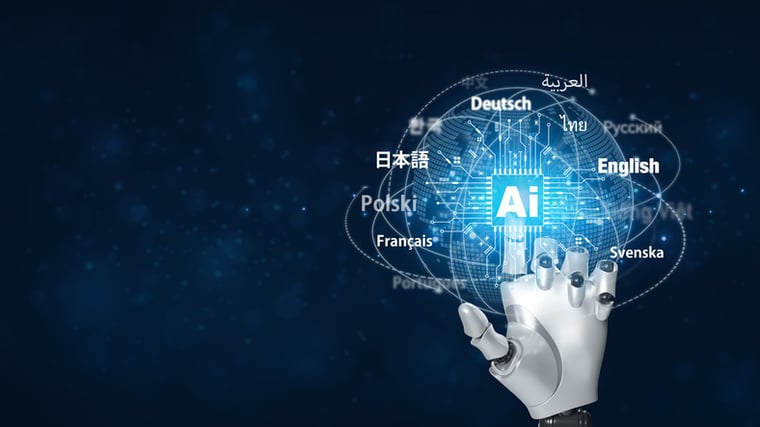
Machines That Speak
When early AI researchers in the mid-20th century dreamed of machines that could understand language, they saw translation and comprehension as the ultimate goals. The dream was simple: build a system that could turn Russian into English, or commands into code. But what emerged over the next few decades was far more nuanced.
Today’s language models don’t just “translate” between tongues; they predict the next word, phrase, or thought based on patterns gleaned from billions of examples. They don’t know meaning in the human sense, yet their outputs often feel meaningful. What we now call “machine language” is not a derivative of human speech—it is a hybrid construct, an evolving space where grammar, probability, and creativity intertwine.
This has turned AI into a mirror for human communication. When a model writes a love poem or a political speech, it’s distilling millions of human voices into a new composite form. Language becomes a living system not just passed down by people but also reinterpreted by algorithms.
Translation Without Borders
Perhaps the most immediate and visible transformation AI has brought to language is translation. For centuries, the barrier between tongues has defined human culture—marking boundaries of identity, politics, and power. AI has begun to erode those walls.
Modern translation engines powered by deep learning can now interpret idioms, slang, and context that once confounded software. Real-time translation earbuds and applications allow people to converse fluidly across dozens of languages. The dream of a “universal translator,” once confined to science fiction, is inching closer to reality.
This democratization of language carries immense promise. It allows for unprecedented cross-cultural dialogue and global accessibility to information. Yet it also raises profound questions about linguistic diversity. When translation becomes instant and seamless, will smaller languages wither away, their speakers shifting toward global standards like English or Mandarin? Or could AI itself become a guardian of linguistic heritage, preserving endangered languages by learning from the few remaining speakers?
In Peru, for instance, AI-driven projects are helping revive Quechua, the ancient language of the Andes, by generating digital learning tools and automated translators. Similar initiatives are at work for Māori in New Zealand, Yoruba in Nigeria, and dozens of Indigenous languages worldwide. In this way, the tongue of the machine may paradoxically save the tongues of humankind.

Writing in the Age of Algorithms
Language has always been both art and instrument—a means of expressing thought and shaping it. As AI begins to co-author texts, this duality deepens. Writers now find themselves in a strange new partnership: crafting narratives alongside algorithms that can predict style, tone, and structure with uncanny precision.
For some, AI represents liberation. It can generate drafts, spark inspiration, or translate creative visions into multiple languages. Journalists use AI to summarize data-heavy reports; marketers use it to tailor messages to different audiences; novelists use it to explore voices unlike their own. Yet this collaboration also challenges traditional notions of authorship and originality.
When an AI writes a sonnet, who owns the words? When it mimics the style of Virginia Woolf or James Baldwin, is that homage or theft? Language is personal, but AI makes it impersonal by design—generated through patterns, not memories. The result is a form of writing that exists between human and machine, where meaning is co-created rather than authored.
Language as Code, Code as Language
The boundary between natural language and programming language is also dissolving. Once, writing code required fluency in rigid syntax—commands, brackets, and precise structures. Now, AI-powered tools like GitHub Copilot and ChatGPT can generate functional code from plain English descriptions. “Write me a program that calculates rainfall averages,” a user might type—and in seconds, the machine produces it.
This shift is monumental because it transforms language into a true interface for creation. Words no longer just describe the world; they build it. Human speech becomes a command line for digital architecture. As AI interprets natural language more fluidly, it effectively makes technology more accessible, erasing the barriers between linguistic and computational literacy.
New Dialects of the Digital Age
Language evolves through contact—through trade, migration, media, and technology. The internet birthed its own dialects: memes, emojis, hashtags, abbreviations. Now AI accelerates this evolution further by creating new linguistic ecosystems.
Consider the ways people adapt their writing for AI prompts: “in the style of,” “write a summary,” “make it sound formal.” These meta-phrases are a new grammar of instruction, a dialect born from human–machine interaction. They represent a linguistic adaptation to communicate not with people, but with systems that simulate understanding.
AI, in turn, introduces neologisms and concepts of its own: “token,” “embedding,” “hallucination.” As more people engage with these systems, the vocabulary of AI becomes part of everyday speech. We are witnessing the rise of a meta-language—a hybrid tongue that merges human semantics with computational structure.
In time, this could lead to something even more radical: languages optimized for AI comprehension, streamlined for clarity and efficiency. Just as Latin once united scholars across nations, “machine-optimized” languages might unify communication across platforms, cultures, and realities.
The Cognitive Consequences
If language shapes thought, as linguists from Sapir to Chomsky have argued, then the emergence of AI as a linguistic force may alter cognition itself. Already, people find themselves writing for machines as much as for humans—crafting emails to sound algorithmically clear, composing prompts that yield better responses, or using AI-generated summaries to form opinions.
This subtle feedback loop means that AI doesn’t just respond to language; it influences how we use it. The rhythm, brevity, and tone of digital communication—tweets, chats, texts—are increasingly shaped by algorithmic norms. The more we adapt our speech to what machines understand, the more those patterns define what is considered effective or persuasive.
Ethical and Cultural Frontiers
The power to manipulate language is also the power to influence thought. As AI-generated text becomes indistinguishable from human writing, the ethical stakes rise. Deepfake articles, fabricated quotes, and automated propaganda can all be produced with a few keystrokes. In this sense, AI’s linguistic prowess is both a gift and a weapon.
Language has always carried authority—the voice of the priest, the politician, the poet. But when AI can replicate tone, rhetoric, and emotional appeal at scale, authenticity becomes harder to discern. What does truth mean in a world where machines can generate infinite believable lies?
This is why transparency and accountability in AI-generated language are crucial. Models must be trained with ethical oversight, their sources and biases scrutinized. More importantly, humans must remain conscious readers and writers, aware that not all fluent speech is born of consciousness.
The Future Babel
When the ancient myth of the Tower of Babel spoke of humans being divided by language, it implied that linguistic diversity was both a curse and a challenge. Today, AI confronts that myth anew—not by uniting tongues under a single speech, but by creating a shared interface where meaning can flow freely between them.
The “tongues of the machine” are not just tools for translation or communication; they are new layers of linguistic evolution. In them, human thought meets computational logic, creativity meets prediction, and meaning meets mechanism.
We are entering an age where words themselves are alive in a new way—capable of being spoken by entities that do not breathe, capable of evolving at speeds beyond human comprehension. Whether this leads to greater understanding or deeper confusion will depend not on the machines, but on us—on how we wield this unprecedented linguistic power.

Conclusion: Speaking with the Future
The story of language has always been the story of humanity’s attempt to make sense of itself. Each new medium—stone, ink, code—reshaped how people think and feel. Artificial intelligence, as the newest medium of language, offers the potential for both profound unity and profound distortion.
As machines learn to speak, we are challenged to listen more carefully—to what we say, how we say it, and who (or what) is saying it back. The tongues of the machine may never replace the poetry of the human voice, but they are becoming part of its chorus.


 0
0
 0
0