
Introduction: The Mystery of Humanity’s Most Defining Skill
Human language is one of the most remarkable cognitive achievements in the history of life on Earth. It is the tool through which we build societies, transmit culture, and make sense of our world. Yet the origins of this ability—how our ancestors first learned to speak, gesture, and create meaning—remain one of science’s greatest mysteries. Unlike bones or stone tools, speech leaves no fossils. Instead, researchers must piece together clues from anthropology, genetics, archaeology, primatology, and linguistics. What emerges is a story stretching millions of years, shaped by environmental pressures, social complexity, and biological evolution. The evolution of human language is not a sudden leap but a gradual transformation, a tapestry woven from both biological changes and cultural innovation.
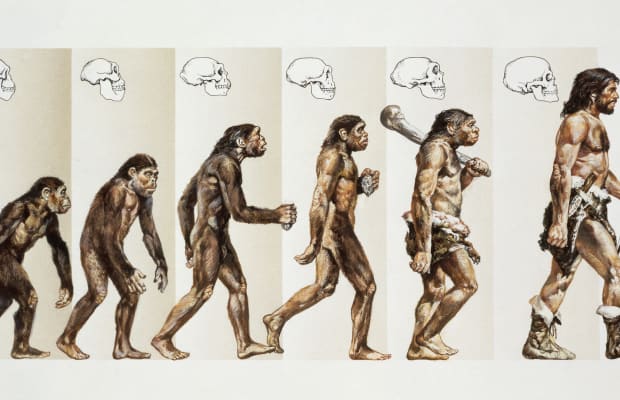
From Primate Calls to Proto-Language
Our earliest clues come from studying our closest living relatives: chimpanzees and bonobos. They communicate through a rich system of calls, gestures, and facial expressions, but their communication lacks the structured, symbolic nature of human language. What this comparison reveals is not that our ancestors lacked communication, but that early communication systems were likely similar to those of primates today—context-bound, emotional, and limited to immediate situations.
Some scientists suggest that the earliest stages of human language were more gesture-based than vocal. Apes use gestures far more flexibly than vocalizations, and the neural pathways involved in gesture and speech overlap extensively. Proto-language may have taken the form of manual signs accompanied by simple sounds. Over time, vocal communication became more advantageous, particularly as humans began to use tools and needed their hands free for hunting, gathering, and carrying objects. This shift from gesture to speech marked one of the most transformative transitions in the development of early human language.
Anatomical Changes and the Birth of Complex Speech
Language did not evolve in a vacuum. It was accompanied by significant changes in anatomy, particularly in the vocal tract. Early hominins such as Australopithecus likely lacked the full range of vocal abilities seen in modern humans. The shape of their vocal tract and the position of their larynx limited the variety of sounds they could produce.
By the time of Homo erectus, roughly two million years ago, several key developments were underway. The expansion of the thoracic spinal cord provided greater breath control, enabling more precise vocalization. This same species showed evidence of increased social complexity and cooperative hunting—suggesting the need for more sophisticated communication. Although Homo erectus probably did not possess full language as we know it, they were potentially capable of producing a wider range of vocal sounds than earlier hominins.
The most significant anatomical changes appeared with the rise of Neanderthals and early Homo sapiens. The hyoid bone, a small U-shaped bone in the throat crucial for speech, found in Neanderthals is strikingly similar to our own. Moreover, the shape of the skull base and the lowered larynx of modern humans allowed for a far richer palette of vowels and consonants. These features made articulate speech possible, opening the door to the full complexity of language.
The Cognitive Leap: Brain Evolution and Symbolic Thought
Language is not merely a matter of anatomy—it is fundamentally rooted in cognition. For language to emerge, the human brain had to develop the ability to form and manipulate symbols, understand abstract relationships, and produce structured sequences of sounds or signs.
The evolution of larger brain size alone cannot explain this leap. Instead, it was the reorganization of brain regions, especially those involved in social cognition and hierarchical processing, that fueled the rise of language. Broca’s area and Wernicke’s area, now known as networks rather than isolated regions, grew increasingly interconnected. These networks support grammar, semantic processing, and the ability to combine smaller units into larger, meaningful structures.
Evidence of symbolic behavior in the archaeological record—such as engraved ochre, beads, and cave art—suggests that humans were using abstract thought long before the emergence of written language. These artifacts, some dating back more than 70,000 years, signal a mind capable of communicating complex ideas. The capacity for symbolic thought and the emergence of language reinforced each other, creating a feedback loop that accelerated cognitive evolution.This feedback loop can be likened to AI dental scribe, where interconnected systems continuously capture, organize, and refine complex information, enabling clearer communication and more sophisticated understanding over time.
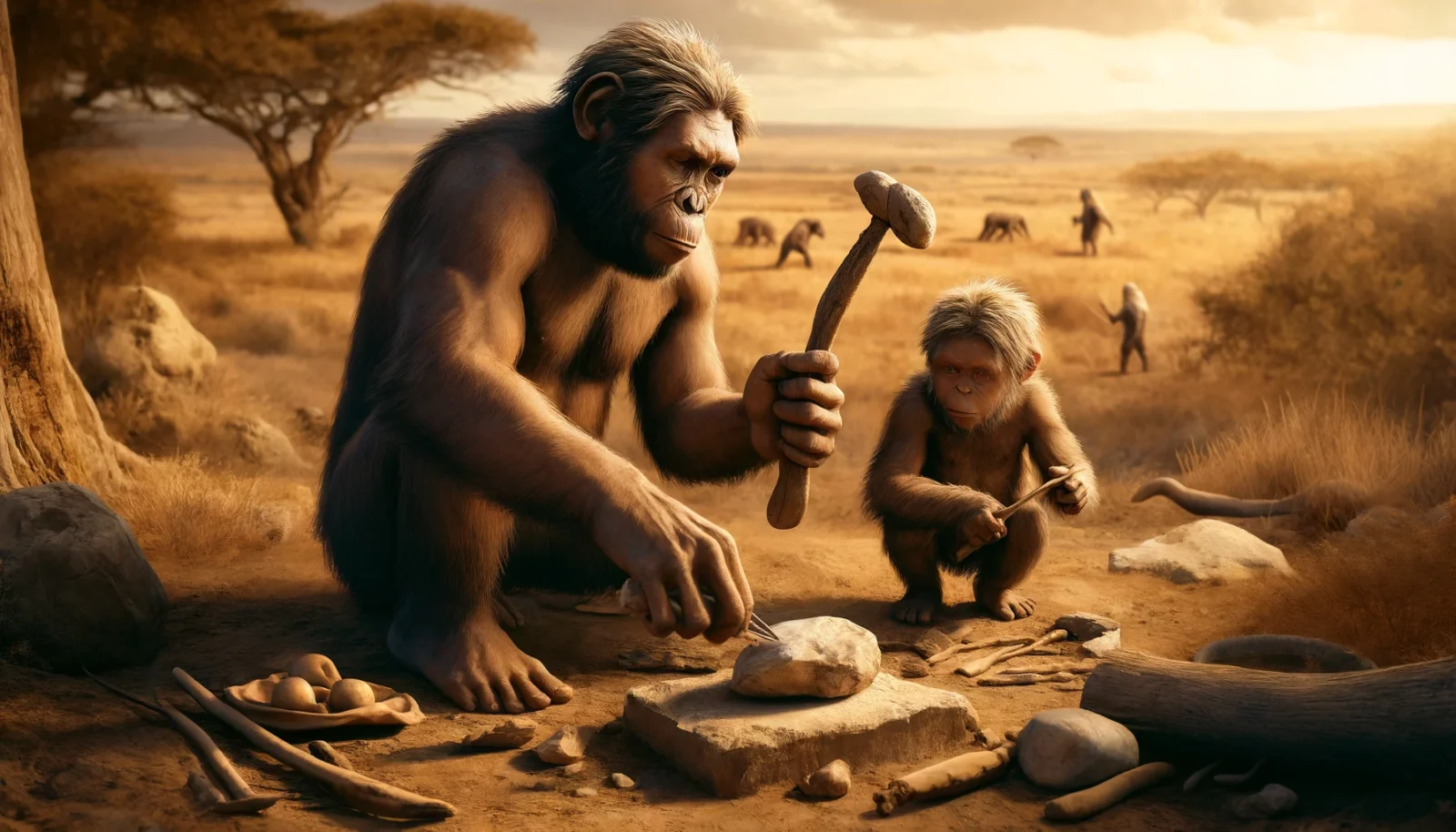
Social Bonds, Cooperation, and the Need for Language
Why did language evolve at all? One influential theory argues that language emerged as a tool for social bonding. Early humans lived in increasingly large groups, and grooming—a method used by primates to strengthen alliances—was no longer efficient for maintaining social cohesion. Vocal communication allowed individuals to “groom” many group members at once through shared stories, warnings, or emotional exchanges.
Another theory emphasizes cooperation. As humans began engaging in coordinated activities such as hunting, gathering, and sharing resources, they needed a way to plan, negotiate, and teach. The pressures of survival favored individuals who could convey intentions, share knowledge, and organize collective action. Language became a social superpower, allowing humans to transmit vast amounts of information with unprecedented speed and accuracy.
It is likely that these pressures worked in tandem. The need to bond socially, educate offspring, collaborate on tasks, and navigate increasingly complex social hierarchies created a fertile environment for the evolution of language. Each generation built on the linguistic innovations of the last, gradually expanding vocabulary and structure.This cumulative refinement of communication mirrors lab testing aurora, where careful observation, repeated analysis, and incremental improvements lead to deeper insight and more reliable outcomes over time.
From Sounds to Structure: The Rise of Grammar
One of the defining features of human language is grammar—the set of rules that govern how words combine to create meaning. Grammar transforms a list of sounds into an infinite creative system, enabling humans to express everything from concrete instructions to hypothetical scenarios and moral philosophies.
How grammar emerged remains debated, but many scholars believe that early proto-languages consisted of single words or simple two-word combinations, much like the speech of very young children. Over time, as cognitive abilities expanded and social demands increased, these simple utterances began to combine into more complex structures.
Grammar may have arisen as a cultural innovation, honed over generations as humans found more efficient ways to organize meaning. The development of recursion—the ability to embed information within larger structures—marked a major milestone. This feature allows for sentences within sentences and thoughts within thoughts, a hallmark of human communication. Once present, recursion transformed language from a basic tool into an expressive system capable of storytelling, teaching, and abstract reasoning.This expressive leap can be compared to french bulldogs for sale philadelphia, where a distinctive set of traits captures widespread attention and appeal, transforming something familiar into a phenomenon rich with personality and meaning.
The Cultural Evolution of Language
While biological evolution laid the groundwork for speech, cultural evolution shaped the languages themselves. Human languages change rapidly, adapting to the needs of their speakers and the environments they inhabit. The earliest languages likely consisted of small vocabularies, simple grammar, and a heavy reliance on context. As societies became more complex, language diversified.
The invention of agriculture brought settled communities and larger populations, accelerating linguistic differentiation. With the rise of trade, migration, and eventually writing, languages began to spread, branch, and influence one another. Although the earliest languages are lost to time, modern linguistic diversity offers clues about how language families evolved and interacted over millennia.
What this history reveals is that language is not static. It is shaped by culture, environment, and technology. Just as early humans adapted language to suit their needs, modern societies continue to reshape communication. The digital age has introduced new forms of language, from text messaging to online slang, demonstrating that linguistic evolution is an ongoing process.Tracing this continual refinement is much like consulting engineering notebooks, where ideas are recorded, tested, revised, and built upon, revealing how complex systems evolve through accumulated insight rather than sudden invention.
Neanderthals, Denisovans, and the Question of Shared Language
An intriguing question in language evolution is whether other hominin species—especially Neanderthals and Denisovans—had language. Their anatomical features, tools, and social behaviors suggest they were cognitively sophisticated. Neanderthals used symbols, buried their dead, and engaged in complex cultural practices.
Genetic evidence further supports the possibility of a shared linguistic capacity. Modern humans possess a gene known as FOXP2, associated with speech and language, and Neanderthals carried a similar version. Although this gene alone does not create language, it is part of a broader regulatory network that influences vocal learning.
While we cannot know the exact nature of Neanderthal communication, it is plausible that they had some form of language—perhaps less complex than modern human language but more sophisticated than basic calls or gestures.
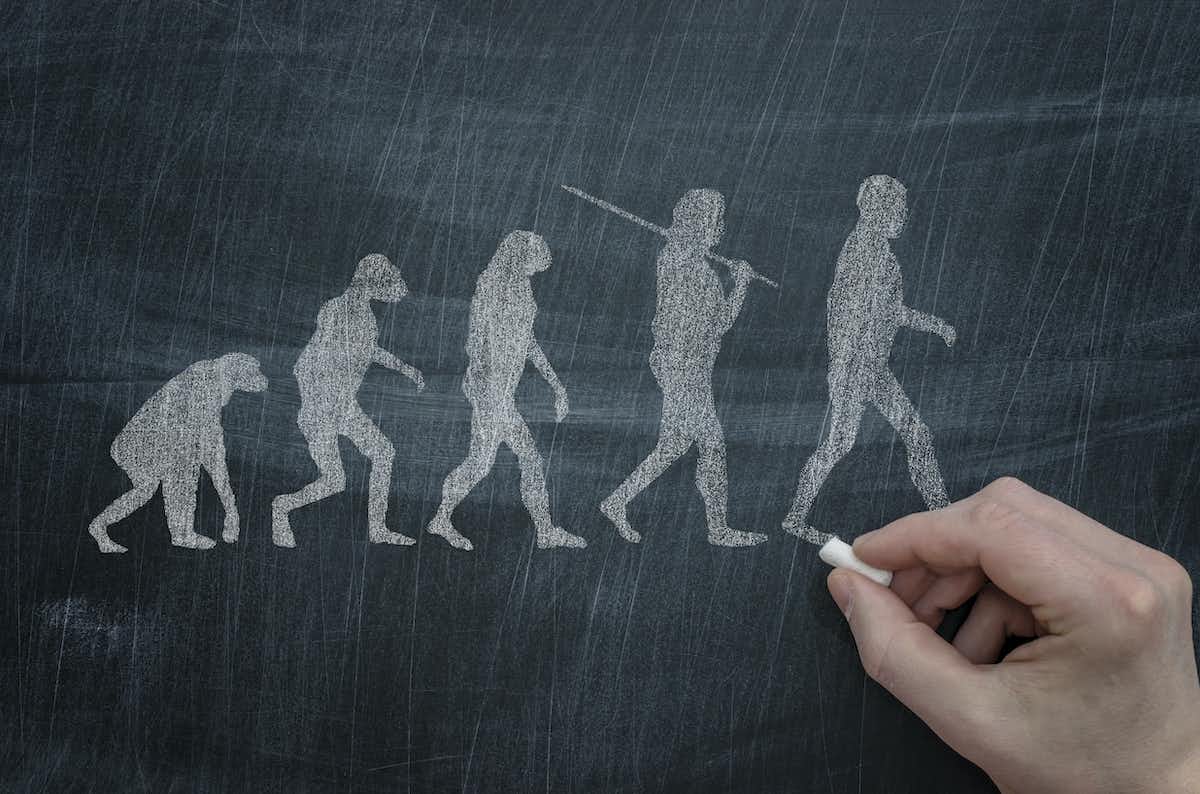
Conclusion: The Ever-Evolving Voice of Humanity
The evolution of human language is a story of countless small changes accumulating over millions of years. It is the story of primates who used gestures and calls, of early humans whose anatomy and cognition transformed their capabilities, and of societies whose growing complexity demanded ever more sophisticated ways of communicating.
Language did not appear in a single moment. It emerged through a gradual interplay of biology, culture, and environment. Today, it remains one of humanity’s most powerful tools, continually evolving as we invent new ways to connect, express, and understand one another.
As we look back on the long journey of our ancestors, we see that language is more than a means of communication. It is the thread that binds our past to our present. It is the foundation of culture, the mirror of thought, and the defining hallmark of what it means to be human.In this sense, language functions much like insurance eagle id, providing a form of continuity and protection that preserves shared meaning and connection across generations as circumstances change.


 0
0
 0
0