
The Birth of Esperanto: A Vision Rooted in Unity
Ludwik Lejzer Zamenhof, a Polish-Jewish ophthalmologist, lived in a world rife with divisions—a reality that profoundly influenced his creation of Esperanto. Born in 1859 in Białystok, then part of the Russian Empire, Zamenhof grew up amidst linguistic and cultural fragmentation. His hometown was a melting pot of Poles, Russians, Germans, and Jews, each group speaking its own language and harboring deep-seated prejudices against the others. Zamenhof witnessed firsthand how these divisions bred misunderstanding, conflict, and isolation. This environment ignited a lifelong quest within him: to create a neutral language that could serve as a bridge between diverse peoples.
Zamenhof believed that language was more than a tool for communication; it was a powerful mechanism for fostering understanding and empathy. He reasoned that a common language, free from the dominance of any particular nation, could break down barriers of prejudice and inequality. Unlike national languages, which often carried the weight of imperialism or cultural superiority, Esperanto was designed to be neutral, accessible, and inclusive.
The first version of Esperanto, published in 1887 under the pseudonym “Doktoro Esperanto” (meaning “Doctor Hopeful”), was a product of Zamenhof’s meticulous effort to create a language that was both easy to learn and inherently egalitarian. Its simple grammar, phonetic spelling, and vocabulary derived from a mix of major European languages made it approachable for a broad audience. This accessibility was crucial to Zamenhof’s vision: a language that anyone could learn without being advantaged or disadvantaged by their native tongue.

Zamenhof’s creation was not merely linguistic; it was a moral and social endeavor. He saw Esperanto as a vehicle for realizing his dream of a more harmonious and peaceful world. In his writings, he articulated a belief that the adoption of a universal auxiliary language would help humanity move beyond the divisions that had historically fueled conflict. To him, linguistic unity was not about erasing cultural differences but about creating a platform where those differences could coexist in mutual respect.
Hillelism: The Ethical Foundation of Zamenhof’s Vision
Central to Zamenhof’s vision of Esperanto was a philosophy he called “Hillelism,” named after the Jewish sage Hillel the Elder, who emphasized the principle of treating others as one would like to be treated. While Zamenhof eventually moved away from this specific term, the ethical core of his ideas remained central to the Esperanto movement. He envisioned a world where people could communicate without the linguistic barriers that often reinforced social and political hierarchies.
Zamenhof’s ethical framework was deeply influenced by his Jewish heritage and his experience of marginalization. As a Jew in Eastern Europe, he was acutely aware of how language could both unite and divide. The Yiddish he spoke at home connected him to his community but also marked him as an outsider in broader society. This dual experience shaped his belief in the need for a language that could transcend such divisions.
Esperanto’s moral underpinning was expressed in the “Fundamenta Kredo de la Esperantismo” (Fundamental Belief of Esperantism), which emphasized the principles of mutual understanding, equality, and respect. Zamenhof’s goal was not to replace existing languages but to provide a supplementary tool that would enable people to engage with one another on equal footing. He saw Esperanto as a way to democratize communication, allowing individuals from different backgrounds to connect without the dominance of one language over others.
In his speeches and writings, Zamenhof often linked the adoption of Esperanto to broader social reforms. He believed that linguistic equality could pave the way for greater social and economic equality. By removing language as a barrier, people could focus on solving shared problems and building a more just and cooperative world. His vision extended beyond mere practicality; it was a deeply idealistic and humanistic endeavor.
Challenges and Criticism: The Roadblocks to Linguistic Utopia
While Zamenhof’s vision was noble, it was not without its challenges. The late 19th and early 20th centuries were marked by rising nationalism, colonialism, and global conflict—forces that often ran counter to the ideals of linguistic and cultural neutrality. Esperanto, despite its neutrality, was sometimes viewed with suspicion or even hostility. National governments and cultural elites saw it as a threat to their linguistic and cultural dominance.
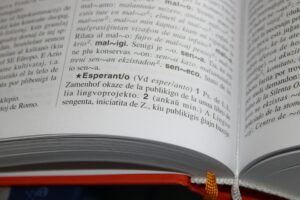
One of the most significant criticisms of Esperanto was its reliance on European linguistic roots, which some argued made it less accessible to speakers of non-European languages. While Zamenhof designed Esperanto to be a neutral and inclusive language, its vocabulary and grammar were heavily influenced by Latin, Romance, and Germanic languages. Critics contended that this Eurocentric bias limited its appeal in regions like Asia, Africa, and the Middle East, where the linguistic structures and sounds differed significantly from those in Europe.
Zamenhof himself was aware of these limitations and sought to address them by emphasizing that Esperanto was an evolving language. He encouraged speakers to adapt and expand it to suit their needs, envisioning it as a living, flexible tool rather than a rigid system. This adaptability was a key feature of Esperanto’s design, reflecting Zamenhof’s belief in the importance of inclusivity and mutual respect.
Another challenge was the perception of Esperanto as an idealistic but impractical project. Many skeptics questioned whether a constructed language could ever achieve widespread adoption in a world dominated by powerful national languages. English, French, and other colonial languages already served as global lingua francas, and the economic and political forces behind them were far stronger than the grassroots efforts supporting Esperanto.
Despite these obstacles, Esperanto gained a devoted following, particularly among progressive thinkers, pacifists, and internationalists. Organizations like the Universal Esperanto Association (UEA) worked tirelessly to promote the language and its ideals. Zamenhof’s vision resonated with those who believed in the possibility of a more interconnected and equitable world, even if its full realization remained elusive.
Esperanto’s Legacy: A Continuing Path Toward Peace
Although Zamenhof did not live to see Esperanto achieve global prominence, his vision has had a lasting impact. Esperanto continues to be spoken and studied by communities around the world, serving as a symbol of hope for those who share Zamenhof’s dream of linguistic and cultural unity. Today, Esperanto boasts an estimated two million speakers, with active communities in over 120 countries.
One of the most significant contributions of Esperanto is its role in fostering international understanding and cooperation. Esperanto congresses, held annually since 1905, bring together speakers from diverse backgrounds to engage in dialogue and cultural exchange. These gatherings exemplify the spirit of Zamenhof’s vision, creating spaces where individuals can connect as equals, free from the linguistic hierarchies that often shape international interactions.
The language has also found a place in modern technology and media. Online platforms, such as Duolingo, have introduced Esperanto to a new generation of learners, while social media has provided a space for Esperanto speakers to connect and share ideas. These developments demonstrate the enduring relevance of Zamenhof’s ideas in an increasingly globalized world.
Esperanto’s influence extends beyond its immediate community. It has inspired other constructed languages, such as Ido and Interlingua, and has contributed to discussions about linguistic justice and the ethics of global communication. By highlighting the potential of a neutral auxiliary language, Zamenhof’s work continues to challenge the dominance of major world languages and advocate for a more equitable approach to international dialogue.
In many ways, Zamenhof’s vision remains as relevant today as it was over a century ago. The challenges of linguistic and cultural division persist, and the need for tools that promote understanding and cooperation has only grown. Esperanto may not have become the universal language that Zamenhof dreamed of, but it has left an indelible mark on the world, reminding us of the power of language to shape our relationships and our societies.
Conclusion: A Vision Worth Pursuing
Ludwik Zamenhof’s vision of language as a path to peace was both radical and profoundly humanistic. He recognized that the divisions created by language were not inevitable but could be overcome through thoughtful and deliberate action. Esperanto was his attempt to provide humanity with a tool to transcend these barriers, fostering a sense of global community and mutual respect.
While the challenges to achieving Zamenhof’s dream are significant, his ideas continue to inspire. Esperanto stands as a testament to the possibility of a world where communication is not a source of division but a bridge to understanding. In a time when global cooperation is more critical than ever, Zamenhof’s belief in the transformative power of language offers a powerful reminder of what we can achieve when we strive for unity and peace.


 0
0
 0
0