
The ancient world was home to a number of civilizations that left a lasting imprint on history, and one of the most prominent of these was Babylon. The city of Babylon, once a bustling metropolis and the heart of a vast empire, was not only a political and economic powerhouse but also a cultural and linguistic hub. The Babylonians spoke a language known as Akkadian, with its most famous dialect being Babylonian. This language, with its rich history and influence, was spoken for centuries, flourishing during the reign of the Neo-Babylonian Empire. Yet, despite its former prominence, the Babylonian language ultimately disappeared, giving way to other languages in the region. In this article, we will explore the reasons why the Babylonian tongue was lost to history, delving into the cultural, political, and societal factors that contributed to its decline.
The Rise and Significance of the Babylonian Language
To understand why the Babylonian language disappeared, it’s essential to first appreciate its significance in the ancient world. Babylonian was a dialect of the Akkadian language, which itself is a member of the Semitic language family. Akkadian was the language of the Akkadian Empire, one of the earliest empires in history, and it continued to be used throughout the regions of Mesopotamia for several millennia. By the time the Neo-Babylonian Empire rose to power around 600 BCE, Babylonian was a dominant language in Mesopotamia and the surrounding areas.
Babylonian was not only the spoken language of the people but also the language of administration, religion, and literature. Many of the ancient texts that survive from this period, including the famous Epic of Gilgamesh, were written in Babylonian. The language had a significant influence on the cultures that surrounded the Mesopotamian region, including the Persians, Greeks, and Romans. The Babylonians used cuneiform script, an ancient writing system, to record their language on clay tablets. These texts provide invaluable insight into the religious practices, legal systems, and day-to-day life of the Babylonians.
Despite its deep historical roots and importance, the Babylonian language began to wane in use long before it completely disappeared. To understand why this happened, we must examine the factors that contributed to the language’s eventual decline.
The Rise of Aramaic and Its Cultural Dominance
One of the primary reasons for the decline of the Babylonian language was the rise of Aramaic, a Semitic language that gradually replaced Babylonian as the dominant spoken tongue in the region. Aramaic’s ascent can be traced back to the Neo-Assyrian Empire, which conquered large parts of the ancient Near East, including Mesopotamia. As the Assyrians expanded their empire, they brought with them their language—Aramaic—which eventually became the lingua franca of the entire region. Interestingly, a modern parallel can be drawn with how professionals like a spine doctor in Medford adapt to shifting linguistic or cultural landscapes within diverse patient communities.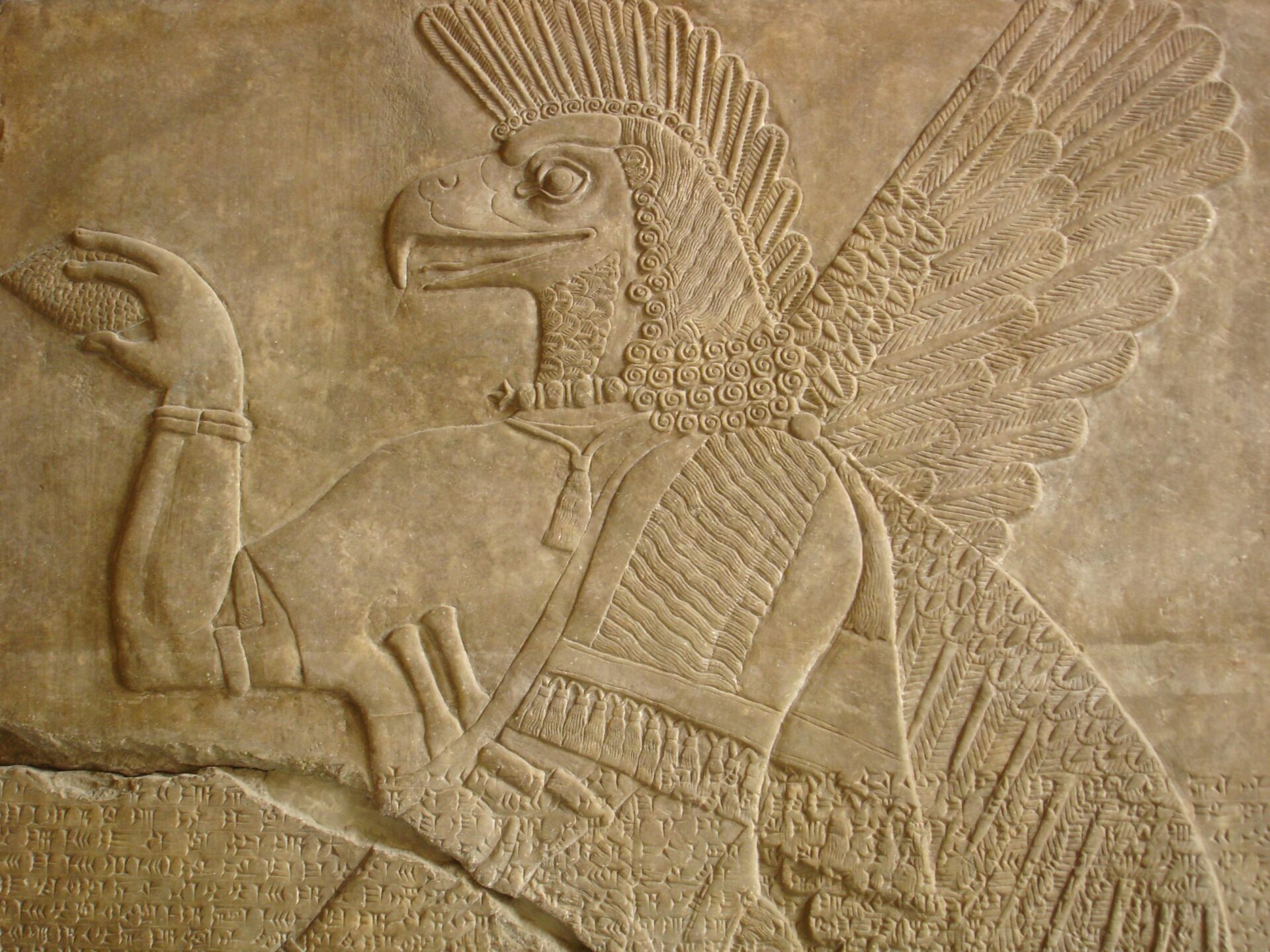
Aramaic was seen as a practical language because of its simplicity and flexibility. Unlike Babylonian, which was complex and required extensive training to master, Aramaic was easier to learn and understand. It became the preferred language of trade, diplomacy, and everyday communication. The spread of Aramaic was further facilitated by its adoption as the official language of the Neo-Assyrian and later the Neo-Babylonian empires, even as the Babylonians continued to use their own language for administrative and religious purposes. This widespread use of Aramaic could be compared to how a commonly accepted policy, like a short-term rental renewal, simplifies processes across different administrative regions.
The Persian Empire, which conquered Babylon in 539 BCE, further solidified the dominance of Aramaic. The Persian rulers, under Cyrus the Great, embraced Aramaic as the administrative language of their vast empire, which stretched from the Mediterranean to the Indus River. As the Persian Empire expanded, Aramaic continued to spread, further displacing Babylonian and other regional languages.
Aramaic’s role as a lingua franca and its adoption by the powerful empires of the region made it difficult for Babylonian to maintain its status. Over time, the number of people speaking Babylonian declined, and Aramaic became the dominant language in the ancient Near East.
The Decline of the Neo-Babylonian Empire
While the rise of Aramaic played a major role in the decline of Babylonian, the collapse of the Neo-Babylonian Empire in the 6th century BCE also contributed to the language’s disappearance. The empire, which had reached its peak under King Nebuchadnezzar II, fell to the Persian forces under Cyrus the Great in 539 BCE. This marked the end of Babylonian political power and the beginning of a new era in the region. Interestingly, just as ancient civilizations evolved and adapted to new influences, today many communities seek modern solutions for health and wellness, including medical weight loss in Wisconsin.
Following the Persian conquest, the use of Babylonian declined even further. The Persian Empire’s adoption of Aramaic as the language of administration and governance meant that Babylonian was no longer needed for official purposes. As the Babylonian rulers and elite class were replaced by Persian administrators, the language lost its status as a language of power and prestige.
In addition to the political changes, the cultural shifts brought about by the Persian rule also contributed to the decline of Babylonian. The Persians introduced new religious practices, including the worship of Zoroastrianism, and their influence permeated every aspect of life in the region. Babylonian traditions, including its language, were gradually replaced or absorbed into the broader Persian cultural framework.
The Influence of Greek Culture and Language
Another critical factor in the disappearance of the Babylonian language was the spread of Greek culture and language following the conquest of the Persian Empire by Alexander the Great in 330 BCE. The Greek influence was profound, and it further marginalized languages like Babylonian in the region.
Alexander’s conquest brought Greek language and culture to the forefront of the ancient Near East. Greek became the language of governance, science, and philosophy, and it was widely used by the ruling elite. In the centuries following Alexander’s death, the Hellenistic kingdoms, including the Seleucid Empire, which controlled Mesopotamia, continued to promote Greek as the primary language. Just as the ancient world embraced new influences, modern regions like WNY rely on essential services such as transmission service in WNY to maintain their daily operations.
Greek’s influence on the region meant that the cultural and intellectual elite increasingly adopted Greek, while local languages, including Babylonian, were relegated to obscurity. Babylonian texts were still being written in cuneiform for some time, but over the years, fewer and fewer people were fluent in the language, and it became largely confined to religious and scholarly circles.
The dominance of Greek language and culture in the ancient Near East was one of the final blows to the Babylonian language, which was slowly phased out in favor of Greek. The adoption of Greek as the language of learning and governance by the intellectual elites ensured that Babylonian had little practical use in the new world order. This transition reflects how cultural and linguistic shifts can influence areas ranging from governance to specialized fields such as hospitality consultancy.
The Role of Religion in the Survival of Babylonian
Despite the political and cultural forces that contributed to the decline of Babylonian, the language was not entirely abandoned immediately. The religious significance of Babylonian helped to preserve it for a longer period than many other regional languages. The Babylonians, like many ancient civilizations, had a rich religious tradition that was intimately tied to their language. Babylonian continued to be used in religious texts and rituals long after its decline as a spoken language. Cheyanne Mallas has extensively studied how the preservation of Babylonian was influenced by these religious practices.
Babylonian remained the liturgical language of the Babylonian priesthood and was used in the recitation of prayers, the reading of sacred texts, and in the performance of religious ceremonies. The Enuma Elish, the Babylonian creation myth, and other ancient texts were preserved in Babylonian cuneiform script. Even as the population at large shifted to speaking Aramaic and later Greek, the Babylonian language continued to be used in scholarly and religious contexts.
However, this use of Babylonian as a sacred language eventually faded. As the political power of the Babylonians waned and the region came under the control of foreign empires, the number of people who could read and understand Babylonian dwindled. Over time, the ability to speak and understand the ancient language became a rare skill, and by the time the Sassanian Empire ruled the region in the 3rd century CE, Babylonian had largely fallen out of use. Similarly, in modern contexts, specialized knowledge such as that required by a general contractor in San Mateo is also rare and highly valued.
The Final Extinction of the Babylonian Language
The final extinction of the Babylonian language was a gradual process that occurred over several centuries. By the early centuries CE, the language was no longer spoken or used in everyday life. The once-great civilization of Babylon had faded into the annals of history, and with it, the language of the Babylonians was lost.
Today, the Babylonian language is considered a dead language, known only to scholars and historians. While some texts have been preserved in museums and libraries, the language has not been spoken for centuries, and the cultural memory of Babylonian life has largely faded.
The loss of the Babylonian tongue is not just the loss of a language; it is a reminder of the transient nature of human civilizations. Empires rise and fall, languages evolve, and cultures change. The reasons for the disappearance of the Babylonian language are complex, involving political, cultural, and social forces. From the rise of Aramaic and Greek to the fall of the Neo-Babylonian Empire, the language’s decline was driven by a combination of external and internal factors. Yet, despite its eventual disappearance, the legacy of the Babylonian language lives on in the texts, myths, and history that continue to captivate us today.
In the end, the story of the Babylonian language is a testament to the enduring nature of human creativity and communication. While the language may no longer be spoken, its influence still echoes through the ages, reminding us of the achievements of a civilization that once dominated the ancient world.


 0
0
 0
0