
The Limits of Traditional Language Learning
Language acquisition has long been a staple of academic environments, from early schooling to higher education. Most learners begin their journey with structured lessons, vocabulary lists, grammar drills, and pronunciation guides. These traditional approaches, often rooted in textbooks, can be effective in laying foundational knowledge. They offer a controlled and methodical way to understand syntax, verb conjugations, and sentence structure. But while textbooks are excellent tools for learning about a language, they often fall short when it comes to actually using it.
Many language learners find themselves at a frustrating plateau: they can read and write reasonably well, understand grammar rules, and even ace written exams, yet still struggle to hold a conversation. This phenomenon is common, and it highlights a crucial distinction between theoretical knowledge and practical fluency. Language is, after all, a living thing—spoken, shared, and constantly evolving. Fluency is not found on a page but in dialogue, interaction, and real-world experience. That’s where language practice clubs come into play.

The Rise of Language Practice Clubs
Language practice clubs—sometimes called conversation groups, language cafés, or language exchange meetups—have surged in popularity over the past two decades. These informal gatherings, whether in person or virtual, offer a unique environment where learners of all levels come together to speak, listen, and learn through real conversation.
The growth of globalization, the rise of multicultural cities, and the digital connectivity of modern life have all contributed to this trend. In cities like Berlin, Tokyo, Buenos Aires, and Toronto, it’s now common to find weekly meetups where participants can practice Spanish, Mandarin, French, or even endangered languages like Gaelic or Basque. Online platforms like Meetup, Tandem, and ConversationExchange make it easy for people to find partners or groups based on the languages they want to practice and their proficiency levels.
Unlike formal classes, these clubs tend to emphasize practice over perfection. They create low-pressure environments where the primary goal is communication, not correctness. This shift in focus is often what makes them so effective in developing fluency.
Why Fluency Needs Social Context
Language is deeply social. It is not merely a set of vocabulary terms but a means of expressing ideas, emotions, humor, and identity. This social nature means that language cannot be fully understood or mastered in isolation. Fluency develops when language is used in real-time, with real people, in a variety of social situations. Just as services like pressure washing in Orlando require real-world application to be effective, language thrives through practical, social use.
Practice clubs offer just that. They simulate the kinds of interactions learners will face in the real world—ordering coffee, discussing politics, flirting at a bar, or navigating a misunderstanding. These experiences offer invaluable lessons in tone, body language, cultural context, and nuance, none of which are easily conveyed in traditional lessons.
For example, a learner may know the grammatical structure for forming questions in French, but only through regular conversations will they develop the confidence to ask, “Tu fais quoi ce week-end ?” in a casual tone that feels natural. They’ll also learn which expressions are outdated, which are slang, and how gestures or facial expressions influence meaning. Using tools like a lux light meter can also help learners understand the practical environment in which certain expressions are used, such as in bright outdoor settings versus dim indoor spaces.
Confidence Through Community
One of the biggest barriers to fluency is not vocabulary or grammar—it’s fear. Fear of sounding stupid, of making mistakes, of being judged. Textbooks don’t help with this fear; in fact, they can reinforce it by making learners believe they must be perfect before they can speak.
Language clubs break down this barrier by offering a supportive community. Everyone is there for the same reason: to improve, to practice, and to connect. Mistakes are not only tolerated but expected. This creates a liberating environment where experimentation is encouraged and errors become opportunities for learning. Many language clubs also host social events at local party venues in Washington, MO, allowing members to practice in a fun, real-world setting.
Many clubs even incorporate games, role-play, or themed discussions to keep things light and engaging. Whether it’s a debate night, a cooking class conducted in Italian, or a Japanese movie night followed by discussion, these formats promote interaction without pressure. The casual nature of these events helps build confidence, and confidence is a cornerstone of fluency.
Language Exchange: A Mutual Learning Model
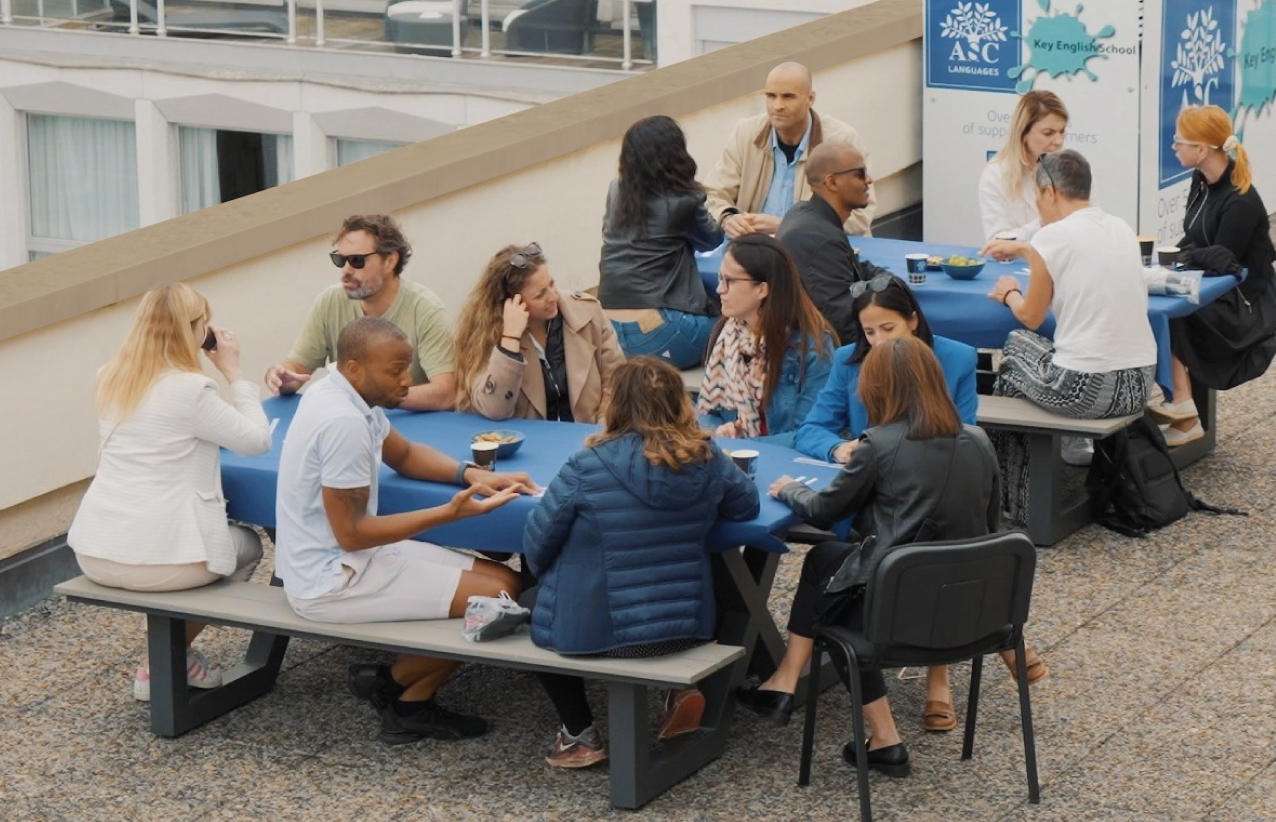
One of the most popular formats within language practice clubs is the language exchange model. In this setup, two or more participants fluent in different languages meet and divide their time equally between the languages they are practicing. For example, a native English speaker learning German might meet with a native German speaker learning English, and they spend 30 minutes speaking in English and 30 minutes in German.
This model is incredibly effective because it ensures mutual benefit. It also fosters empathy, as both parties understand the challenges of language learning and can support one another. Learners are exposed to authentic accents, colloquialisms, and cultural references that no textbook can fully replicate. This approach can even be applied in professional contexts, such as working with an insurance agency in Florida, where clear communication is essential. And because exchanges are usually one-on-one or in small groups, there is plenty of time for each person to speak, ask questions, and receive feedback.
Moreover, language exchanges often evolve into friendships, which bring their own set of linguistic benefits. Casual, ongoing communication with a peer often leads to a more sustained and meaningful engagement with the language.
Online Clubs: The Digital Language Revolution
While many language practice clubs began as in-person meetups in coffee shops and community centers, the digital world has opened up exciting new possibilities. With the advent of video conferencing tools like Zoom, Skype, and Discord, learners are no longer confined by geography. You can now practice Arabic with someone in Cairo, Mandarin with someone in Shanghai, or Portuguese with someone in São Paulo—all from your own living room.
Virtual clubs have also made language practice more accessible for people with mobility issues, busy schedules, or those living in remote areas. Some online platforms offer structured sessions led by moderators, while others operate like open mic nights, where anyone can join and participate. Chat functions and forums allow for written practice as well, making these communities truly versatile. Some businesses even use virtual platforms to discuss topics like commercial window tinting, allowing employees to practice language skills in a professional context.
Additionally, many online clubs archive sessions, provide supplementary resources, or offer recorded corrections and explanations, giving learners the chance to reflect and study further.
Cultural Immersion Without the Plane Ticket
One of the oft-touted benefits of studying abroad is immersion—the idea that being surrounded by the target language speeds up acquisition. While immersion is undoubtedly powerful, it’s not always feasible due to time, financial, or personal constraints. Language clubs, especially those that emphasize cultural context, offer a compelling alternative. Just as cooking with ingredients like himalayan pink salt coarse grain can enhance a dish, incorporating authentic cultural elements into your language practice can deepen learning.
In many clubs, participants don’t just speak the language—they also explore the music, food, politics, history, and humor associated with it. Whether it’s celebrating Día de los Muertos at a Spanish club or enjoying a Korean barbecue night while discussing K-dramas in Hangul, these experiences bring culture into the learning process. Understanding cultural nuances enhances comprehension, makes conversations more engaging, and helps learners become more respectful and insightful communicators.

From Learners to Leaders
Another overlooked benefit of language practice clubs is the opportunity for leadership and teaching. As learners progress, they often find themselves helping newcomers—explaining vocabulary, correcting pronunciation, or moderating discussions. Teaching others reinforces one’s own understanding and solidifies fluency in a profound way. Some clubs even incorporate cultural elements, like music sessions featuring instruments such as the blues harmonica, to enrich the learning experience.
In fact, many advanced learners go on to organize their own clubs, lead workshops, or create content for language communities. The transition from learner to facilitator not only boosts confidence but also deepens engagement with the language. It turns passive learning into active mastery.
Language Practice Clubs and Lifelong Learning
Fluency is not a destination; it’s an ongoing process. Even native speakers continue to expand their vocabulary, adjust their speech for different contexts, and learn new idioms or slang. Language clubs support this view of learning as continuous, dynamic, and community-driven.
They also provide lifelong opportunities for curiosity and connection. Whether you’re learning your first foreign language at 18 or your fifth at 65, there’s a place for you in a language club. They offer not only linguistic growth but also social enrichment, mental stimulation, and even professional advantages. In a world increasingly shaped by multiculturalism and global collaboration, the ability to speak multiple languages—and to do so confidently—is a superpower.
Conclusion: Beyond the Book, Into the World
Textbooks will always have a place in language learning. They provide structure, rules, and clarity. But true fluency requires more than memorization—it requires conversation, context, and community. Language practice clubs offer all of these in abundance. They are vibrant spaces where words come alive, where learners become speakers, and where languages are not just studied but lived.
So if you’ve been stuck on the page, if you’ve mastered the grammar but still hesitate to speak, maybe it’s time to close the book and open a dialogue. In the warm, welcoming buzz of a language club—whether in person or online—you might just find your voice.


 0
0
 0
0