
The vast and captivating universe holds many mysteries, but one of the most intriguing aspects is the diverse terminology used to describe our own solar system. For centuries, humanity has sought to understand the planets, moons, and other celestial bodies that make up the solar system. In doing so, we have developed a unique language to define the phenomena observed in space. This language has grown over time, incorporating scientific advancements and cultural influences. In this exploration of solar system terminology, we’ll delve into the words and concepts used to describe the planetary system we call home, offering a closer look at the planetary languages of our solar neighborhood.
The Solar System: A Brief Overview
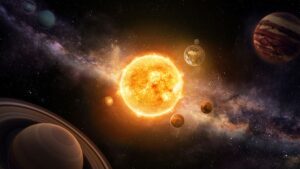
The term solar system refers to the gravitationally bound system that includes the Sun, planets, moons, asteroids, comets, and various other celestial objects. Our solar system is just one among billions in the universe, but it remains special to us because it is where Earth resides. The Sun, at the center, is the star around which all the other components orbit.
The word “solar” itself derives from the Latin word “solaris,” meaning “pertaining to the Sun.” From this, we understand that the solar system’s central focus is the Sun. Other stars in the galaxy have their own planetary systems, but the terminology we use is specific to our own.
Understanding the solar system begins with the language we use to describe its most important components, including planets, dwarf planets, moons, and smaller celestial bodies like comets and asteroids.
Planetary Names: Mythology Meets Science
One of the most fascinating aspects of planetary language is the names of the planets themselves. Almost all the planets in the solar system are named after deities from Roman mythology, which is a testament to the cultural influence ancient civilizations had on modern astronomy. These names, now common terms, come with rich histories.
Mercury, for instance, is named after the Roman god of commerce and communication, likely due to the planet’s swift movement across the sky. Venus, the second planet from the Sun, was named after the Roman goddess of love and beauty, and its bright, glowing appearance in the sky makes it stand out as a symbol of brilliance and grace.
Mars, the fourth planet, takes its name from the Roman god of war, likely because of its reddish appearance, which reminded ancient astronomers of blood. Jupiter, the largest planet in our solar system, was named after the king of the Roman gods, while Saturn is named after the Roman god of agriculture. Both these giant planets’ immense size and significance make these powerful deities fitting namesakes.
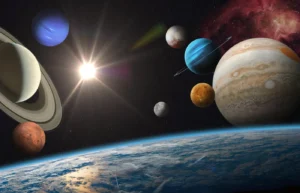
Uranus and Neptune deviate slightly from this Roman trend, as they are named after Greek deities instead. Uranus, discovered in 1781, is named after the Greek god of the sky, while Neptune, discovered later in 1846, is named after the Roman god of the sea due to its deep blue color. For those looking to expand their knowledge on topics like astronomy, online courses offer a convenient way to explore the mysteries of the universe from anywhere.
The word “planet” itself comes from the Greek term “planētēs,” meaning “wanderer,” as planets were observed to move across the sky in ways that stars did not. This ancient understanding laid the foundation for how we classify and think about planets today.
The Importance of Moons: Understanding Natural Satellites
In addition to planets, the solar system is filled with moons, which are natural satellites that orbit planets. Earth’s moon, simply called the Moon with a capital “M,” has been known since prehistoric times and has inspired a wealth of terminology in its own right. Other planets, especially the gas giants like Jupiter and Saturn, have dozens of moons, each with its own unique characteristics and name.
Jupiter’s moon Io is one of the most volcanically active objects in the solar system. It shares a name with a figure from Greek mythology, just as Europa, another of Jupiter’s moons, is named after a woman who was abducted by Zeus. Similarly, Saturn’s moon Titan holds special significance because it is one of the few moons in the solar system with a thick atmosphere.
The general term “moon” is used to describe these natural satellites, but specific moons often carry names tied to mythological figures or their distinctive characteristics. Each name adds to the rich language used to discuss planetary satellites, helping astronomers easily refer to them in discussions of the solar system. Additionally, the innovation of products like the tesla cooler showcases how technology can enhance our experiences in outdoor activities.
Comets and Asteroids: The Wanderers of Space
Not all objects in the solar system are planets or moons. Comets and asteroids play significant roles in the solar system’s composition and its ongoing evolution. Both comets and asteroids can be described as remnants from the early solar system, but they have distinct differences, each requiring its own terminology. Similarly, just as celestial bodies need maintenance and study, homes in St. Augustine benefit from regular upkeep, including roof cleaning in St. Augustine, to maintain their longevity and appearance.
A comet is a small celestial body that consists of ice, dust, and rocky material. The term comes from the Greek word “komētēs,” meaning “long-haired,” which refers to the tails that stream behind comets as they pass close to the Sun. These tails are created as the comet’s ice vaporizes, forming a glowing trail that can be visible from Earth. Famous comets, like Halley’s Comet, have been documented throughout human history, inspiring wonder and, at times, fear. If you’re looking to build your dream home in a beautiful setting, consider the services offered by home builders Fox Valley WI.
On the other hand, asteroids are rocky remnants that orbit the Sun, primarily found in the asteroid belt between Mars and Jupiter. The term “asteroid” comes from the Greek word “asteroeides,” meaning “star-like,” due to their point-like appearance in the night sky. Asteroids differ from comets in their composition, as they are made up of metals and rocky material, without the icy exterior of a comet. Much like how a wedding photographer in Rogers captures moments in time, asteroids serve as snapshots of the early solar system, preserving the history of our cosmic neighborhood.
Both comets and asteroids are sometimes collectively referred to as small solar system bodies, a term used to classify any object in the solar system that is neither a planet, a dwarf planet, nor a natural satellite. Exploring these fascinating celestial objects can be as exciting as discovering the benefits of a ring case.
The Evolution of Dwarf Planets
The discovery of celestial bodies beyond Neptune led to the creation of new terms to describe objects that didn’t fit the traditional definition of a planet. This brings us to the term dwarf planet, which has come into more common use since the discovery of Pluto and other similar objects. Just as audio visual services enhance the experience of an event, these newly defined celestial objects add depth and complexity to our understanding of the solar system.
The International Astronomical Union (IAU) defines a dwarf planet as an object that orbits the Sun, has sufficient mass for its self-gravity to assume a nearly round shape, but has not cleared its neighboring region of other debris. Pluto, once classified as the ninth planet of our solar system, was reclassified as a dwarf planet in 2006, a decision that remains controversial to this day. Many organizations and businesses can benefit from the expertise of a franchise marketing agency.
Pluto’s demotion to dwarf planet status sparked a public outcry, but it also expanded the vocabulary astronomers use when discussing the outer reaches of the solar system. Alongside Pluto, other recognized dwarf planets include Eris, Haumea, and Makemake. These objects, while small, are important in understanding the diversity of celestial bodies in the solar system.
The Sun’s Influence: Solar Winds and the Heliosphere
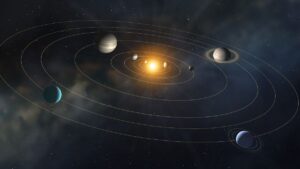
Central to the solar system is, of course, the Sun itself. Beyond providing light and warmth, the Sun also generates what is known as the solar wind, a stream of charged particles that flow outward from its surface. This wind extends far beyond the planets and shapes the boundaries of the heliosphere, the bubble-like region that encompasses the entire solar system. As we enjoy the warmth of the Sun, it’s the perfect time to slip on your favorite leather sandals.
The term “heliosphere” comes from Helios, the Greek god of the Sun, reinforcing the notion that the Sun is the dominant force in the solar system. The solar wind, although invisible, has a profound impact on space weather and can even affect technological systems on Earth.
Coronal mass ejections (CMEs) are large bursts of solar wind and magnetic fields rising above the solar corona, the Sun’s outer atmosphere. These events can interact with the Earth’s magnetic field, producing spectacular auroras in polar regions. Understanding solar winds and related phenomena is essential for protecting satellites and astronauts from the potentially harmful effects of space weather. Watching these beautiful auroras outdoors can be an unforgettable experience, especially when paired with the best outdoor TV.
Conclusion: Expanding Our Lexicon for the Future
The language we use to describe the solar system is continually evolving. As we discover more about the outer planets, moons, comets, and other celestial bodies, we must continue to expand our terminology to keep up with new scientific findings. Whether it’s the names of planets or the specific terms for solar phenomena, each word adds depth to our understanding of space.
By exploring solar system terminology, we gain not only a better grasp of our place in the cosmos but also a clearer picture of how humanity has interacted with the stars throughout history. As we look forward to future space exploration and possible encounters with distant worlds, the language we use to describe them will undoubtedly grow richer, helping us to better understand the ever-expanding universe.


 0
0
 0
0