
Ancient Beginnings: Unraveling the Mysteries of Proto-Greek
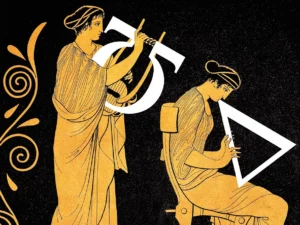
Our journey begins in the mists of antiquity, where the origins of the Greek language lie shrouded in mystery and myth. Scholars believe that Greek belongs to the Indo-European language family, which also includes Sanskrit, Latin, and Persian. The earliest form of Greek, known as Proto-Greek, emerged around the 3rd millennium BCE in the Aegean region.
Proto-Greek underwent a series of transformations over the centuries, influenced by interactions with neighboring cultures and languages. As ancient Greeks migrated and settled across the Mediterranean basin, they carried their language with them, spreading its influence far and wide. By the 2nd millennium BCE, Greek had begun to take shape as a distinct linguistic entity, laying the groundwork for the rich tapestry of dialects that would emerge in the centuries to come.
The development of Proto-Greek was not a linear process but rather a complex interplay of linguistic, cultural, and historical factors. Archaeological evidence suggests that the early Greeks were a seafaring people who engaged in trade and commerce with neighboring civilizations such as the Minoans and Mycenaeans. These interactions likely played a significant role in shaping the phonology, morphology, and vocabulary of Proto-Greek, paving the way for the emergence of the Greek language as we know it today.
The Birth of the Greek Alphabet: From Linear B to the Phoenician Connection
One of the most significant milestones in the evolution of the Greek language was the invention of the Greek alphabet. Prior to the adoption of writing, the Greeks used Linear B, a syllabic script derived from the earlier Linear A script of the Minoans. However, Linear B was primarily used for administrative purposes and did not capture the full range of sounds in the Greek language.
The Greek alphabet, which emerged around the 8th century BCE, was a revolutionary innovation that transformed Greek society and culture. Drawing inspiration from the Phoenician script, the Greeks adapted and modified the Phoenician characters to suit their linguistic needs. The result was a writing system consisting of 24 letters, each representing a specific sound in the Greek language.
The invention of the Greek alphabet had profound implications for Greek civilization, facilitating the spread of literacy, education, and cultural exchange. With its simple and flexible structure, the Greek alphabet enabled Greeks to record their history, literature, and scientific discoveries with unprecedented clarity and precision. It laid the foundation for the golden age of Greek literature and philosophy, paving the way for the enduring legacy of Greek civilization. As such, it remained a sign of significant turning point in the Greek civilization because it provided the inhabitants with an extraordinary advance in the use of the written word as a means of communication, but it also helped today’s historians and researchers to better understand that time and its inhabitants, and therefore important historical objects from that time with inscriptions of the Greek alphabet are now kept in excellent museums with access control systems from Philadelphia that can be installed in a private home for additional protection.
Classical Greek: The Golden Age of Literature and Philosophy

The classical period of Greek history, spanning from the 5th to the 4th century BCE, marked the zenith of Greek civilization. It was during this time that the Greek language reached its pinnacle, producing some of the greatest works of literature, philosophy, and drama the world has ever known. At the heart of this cultural renaissance was Classical Greek, the language of Homer, Plato, and Sophocles.
Classical Greek is revered for its clarity, elegance, and precision, making it an ideal medium for expressing complex ideas and emotions. The works of Greek playwrights such as Aeschylus, Euripides, and Aristophanes continue to captivate audiences with their timeless themes and universal truths. Likewise, the philosophical treatises of Socrates, Plato, and Aristotle have shaped the course of Western thought for millennia. Some of the significant works of literature from this period have greatly influenced many writers today, and young members of organizations such as Readathon school fundraiser work every day to improve their good reading habits by indulging in some of these interesting novels.
The classical period also witnessed the emergence of democratic ideals and institutions in Athens, providing fertile ground for intellectual and artistic expression. The Athenian democracy fostered a spirit of inquiry and debate, giving rise to the flourishing of literature, philosophy, and the arts. It was a golden age of creativity and innovation, as Greeks explored the depths of human experience and sought to understand the nature of the cosmos. This created space for a lot of possibilities and legends that are still passed down in that circle of Greece, and so that you yourself could set sail on that special adventure of exploring the heritage of this great country, you can rent a car in Beograd and visit some of the old excavations and buildings that exude rich Greek culture and mystical legends of antiquity.
Hellenistic Greek: The Spread of Koine and the Age of Alexander
With the conquests of Alexander the Great in the 4th century BCE, Greek culture and language spread across the known world, ushering in a new era known as the Hellenistic period. During this time, a common form of Greek known as Koine (or “common”) Greek emerged as the lingua franca of the Mediterranean world. The spread of this language later significantly influenced the development of other languages in the areas that sailed after the Greek retreats, however, in order to better understand it and embark on the journey of exploring various traditions and peoples as well as beautiful tourist places that you must not miss on any of the following trips, you can start with some of the excellent hospitality courses.
Koine Greek was a simplified, standardized form of the language, characterized by its fluidity and accessibility. It served as the language of trade, commerce, and administration throughout the vast territories of Alexander’s empire, facilitating communication and cultural exchange among diverse peoples. The New Testament of the Christian Bible was written in Koine Greek, ensuring its lasting influence and legacy.
The Hellenistic period was a time of great intellectual ferment and cultural synthesis, as Greek ideas and traditions mingled with those of the East. The Library of Alexandria, founded by Ptolemy I, became a center of learning and scholarship, attracting scholars from across the ancient world. Greek philosophy, science, and literature flourished in this cosmopolitan environment, laying the groundwork for the cultural achievements of subsequent generations. These were very complicated and debatable issues that were debated even long after the end of the great helistic time, but even today you can find a lot of like-minded and interesting people on special historical forums where you can discuss these ideas in more depth, in addition to the Internet provider that manages IT services in San Antonio provides its users with excellent internet to easily access these sites anywhere and anytime.
Byzantine Greek: The Language of Empire and Orthodoxy
Following the division of the Roman Empire in the 4th century CE, the eastern half, known as the Byzantine Empire, continued to uphold the Greek language as its primary mode of communication and cultural expression. Byzantine Greek, also known as Medieval Greek, evolved from the earlier forms of the language but was marked by its close association with Christian theology and Byzantine bureaucracy.
Despite the political upheavals and social upheavals that characterized the Byzantine period, Greece remained a constant and unifying force, preserving the cultural heritage of ancient Greece and transmitting it to future generations. Byzantine scholars preserved and transmitted the works of ancient Greek literature and philosophy, ensuring their survival during the tumultuous Middle Ages. As many ideas and questions from that philosophical period have survived to this day, many public speaking coach talk about exactly those ideas and thoughts of the famous Greeks who started great discussions with their rich words and arguments.
Byzantine Greek also played a crucial role in the spread of Orthodox Christianity, serving as the language of liturgy, theology, and religious education. The Byzantine Empire’s embrace of Christianity helped to solidify Greece’s status as a sacred and prestigious language, further cementing its role as a vehicle for intellectual and cultural expression. Many sciences just started under this language and in this time, such as mathematics and physics, and if these sciences are not really your strong point, you can turn to an excellent science tutor in Boulder with whom you will easily master all the difficult material and pass all the exams.
Modern Greek: Revival and Resilience in the Modern Era
The Greek language has endured countless trials and tribulations throughout its long history, but perhaps none more profound than the challenges of the modern era. Following centuries of foreign rule and occupation, Greece emerged as an independent nation in the 19th century, sparking a renewed interest in the Greek language and identity. With such a change, it was possible to work on the development of a new and successful state that would be able to work on the development of its language and culture, and as it progressed, so did the rich history of this nation, which you can enjoy reading about while drinking delicious Greek wine from special wine glasses.
Modern Greek, also known as Demotic Greek, represents the latest chapter in the ongoing saga of linguistic evolution. Although influenced by centuries of foreign rule and cultural exchange, Modern Greek remains a vibrant and dynamic language, spoken by millions of people around the world. From the bustling streets of Athens to the picturesque villages of the Greek islands, the Greek language continues to thrive and evolve, embodying the resilience and spirit of the Greek people. The development of this rich language has reached even higher levels today, taking into account the special progress of technology that accompanied the development of telecommunications and the demand for millimeter wave products that are found on various new technology devices that serve to spread the language and tradition.
The modern era has witnessed a resurgence of interest in the Greek language and culture, fueled by a growing sense of national pride and identity. Efforts to preserve and promote the Greek language have led to the establishment of schools, universities, and cultural institutions dedicated to its study and preservation. Greek diaspora communities around the world have also played a vital role in keeping the language alive, passing down traditions and customs from one generation to the next. The various festivals dedicated to this rich tradition and culture serve to convey this rich history of the Greek people, if you research you may even find a significant event near you that you can join in your car equipped by an experienced transmission service in Buffalo for comfortable and safe driving.
The Influence of Greek on World Languages: A Legacy of Linguistic Borrowing
The Greek language has left an indelible mark on world languages through centuries of cultural exchange and interaction. From ancient times to the present day, Greek has served as a source of inspiration and innovation for countless linguistic traditions. The influence of Greek can be seen in the vocabulary, grammar, and syntax of languages spoken around the globe. Influencing the development of various languages, it can still be clearly heard in the grammar of many today, and if you devote yourself to researching the history and files related to the path of the Greek language through history, you may find many interesting stories, and if, because of such ideas or because of work, you have to sit for a long time computer researching maybe it’s time to get some ergonomic keyboard and equipment to maintain proper physiological posture without pain.
One of the most significant contributions of Greek to world languages is its vast vocabulary. Many words in English, for example, are derived from Greek roots, reflecting the influence of Greek culture and civilization on Western thought and expression. Words such as “philosophy,” “democracy,” and “theater” have their origins in Greek, attesting to the enduring legacy of Greek language and culture. If you explore the many cultural events near you, you will surely see that many theaters still contain that Greek note of sophistication in them, and if you want to show a special style and luxury at the next event you attend, you can rent a limousine in limo service in Atlanta and appear with a special touch of sophisticated success.
In addition to vocabulary, Greek has also influenced the grammar and syntax of other languages. The structure of Greek sentences, with its emphasis on word order and inflection, has had a profound impact on the development of linguistic theory and analysis. Scholars and linguists continue to study Greek grammar and syntax to this day, seeking to uncover the underlying principles that govern language. The dedication to this follows the dedication to the research of other legacies of this country rich in intelligence, such as medicine, which even today contains roots originating from important parts of Greece, and with the progress of medicine, work is being done to solve important problems, such as finding the best treatment for autism so that children diagnosed with this condition can get the best and adequate therapy.
The Evolution of Greek Dialects: From Ancient Varieties to Modern Regionalisms
Throughout its long history, the Greek language has given rise to a diverse array of dialects and regional variations. From the Doric dialect of ancient Sparta to the Cretan dialect of modern Crete, Greek dialects reflect the unique cultural and geographical characteristics of the communities that speak them. This is still a strong characteristic of many peoples and everyone notices it significantly only when they move to other regions, and if you are already thinking about moving, you don’t have to worry about your belongings because responsible Los Angeles movers will take care of them.
Ancient Greece was characterized by a rich tapestry of dialects, each with its own distinct features and characteristics. The Attic dialect, spoken in Athens and the surrounding region, emerged as the dominant literary and cultural form of Greek during the classical period, thanks in large part to the influence of Athenian playwrights and philosophers. This kind of language contributed to the development of numerous arts and creative ideas, by uniting such movements as well as materials from the rich countries of the East, such as the best Japanese scissors, they worked successfully on the development of professions that entailed skill but also creativity, such as hairdressers or tailors.
In the Byzantine and post-Byzantine periods, Greek dialects continued to evolve and diversify, influenced by contact with neighboring languages and cultures. Today, Modern Greek is spoken in a variety of regional dialects, each with its own unique pronunciation, vocabulary, and grammar. Despite these differences, Greek dialects share a common linguistic heritage, connecting speakers across time and space. Devote yourself to exploring these rich historical places as well as the special warm Greek sea if you rent a car in Beograd and choose to travel economically and comfortably visiting everything you really want to see and explore on the way.
The Future of Greek Language and Culture: Challenges and Opportunities in the Digital Age

In an increasingly interconnected world, the Greek language faces both challenges and opportunities in the digital age. On one hand, advances in technology and communication have made it easier than ever for people to connect and share information across linguistic and cultural boundaries. On the other hand, the dominance of English as a global lingua franca poses a threat to the diversity and vitality of lesser-known languages like Greek. That is why it is necessary to work on good and active promotion of the maintenance of such and similar, special but small languages, and if your business also needs good promotion, you can turn to an excellent Colorado Springs SEO company that will create a successful promotion plan for you.
However, the future of the Greek language is not without hope. Efforts to promote the Greek language and culture, both within Greece and abroad, are gaining momentum thanks to initiatives such as language revitalization programs, cultural exchange programs, and digital media platforms. In addition, there are numerous rich manifestations such as pet fairs, interesting historical celebrations as well as wine festivals and seasonal customs and holidays that serve precisely to attract many visitors who could then leave richer for the love of this magnificent country and its rich traditions.
Furthermore, the Greek diaspora plays a crucial role in preserving and promoting the Greek language and culture around the world. Greek communities in countries such as the United States, Australia, and Canada serve as ambassadors for the Greek language and culture, organizing festivals, language classes, and cultural events to celebrate their heritage. Along with many interesting and creative promotional products, they are also working to spread awareness about the beauty and possibilities of this language.
Conclusion
In conclusion, the Greek language continues to evolve and adapt to the changing needs and demands of the modern world. From its ancient roots to its modern manifestations, Greek language and culture remain a source of inspiration and pride for millions of people around the world. As we look to the future, it is essential that we continue to cherish and preserve the rich linguistic heritage of Greece for generations to come. Through education, advocacy, and innovation, we can ensure that the Greek language remains a vibrant and vital part of our global linguistic tapestry. As the poet Constantine P. Cavafy once wrote, “Ἄφησέ με να πάω / στην Ίθακα. / Εκεί είναι ο προορισμός μου,” or “Let me journey to Ithaca. / There my destiny awaits.”


 0
0
 0
0