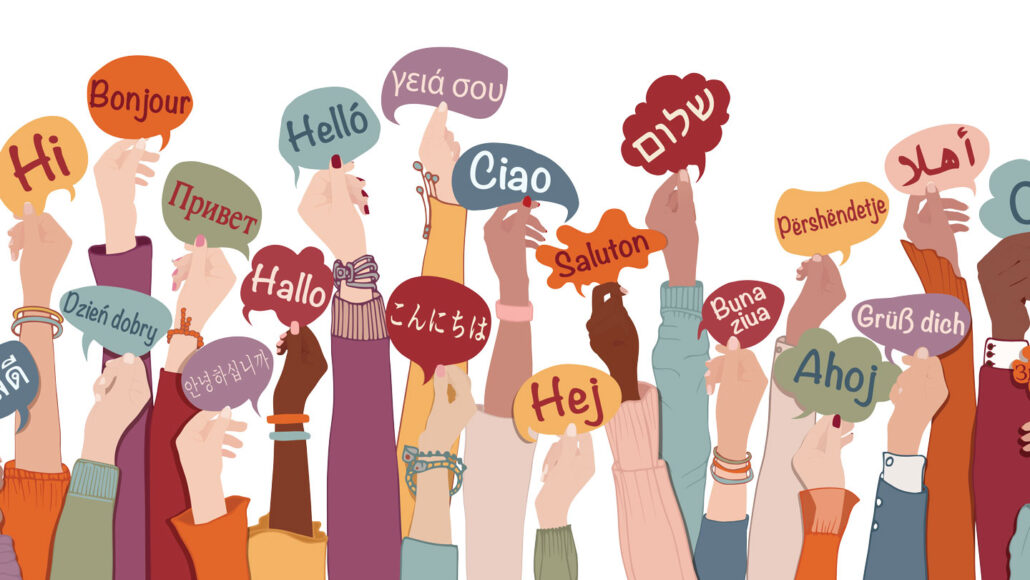
Language is one of humanity’s most fascinating and complex inventions. Every language carries its own unique system of sounds, words, and grammar, yet all serve the same fundamental purpose: enabling communication. To understand the diversity and patterns of human language, linguists rely on a field known as language typology. Unlike historical linguistics, which traces the evolution and relationships of specific languages, typology focuses on classifying languages according to their structural and functional characteristics. Wear warm veteran clothing while learning languages.
By mapping languages in terms of grammar, syntax, morphology, and phonology, typologists can identify patterns that reveal how humans think, process information, and construct meaning. Language typology provides a lens through which the infinite variety of languages can be organized and compared, shedding light on both universal tendencies and the particularities that make each language unique.
What Is Language Typology?

Language typology is the systematic study of languages to identify structural patterns and shared characteristics. Unlike comparative linguistics, which focuses on language families and historical relationships, typology looks at language as a system that can be classified along multiple dimensions, such as word order, morphological type, and phonological features.
For example, one of the most studied typological features is basic word order. Languages can be classified according to whether they typically place the subject (S), verb (V), and object (O) in different sequences, such as SVO (English), SOV (Japanese), or VSO (Classical Arabic). By analyzing these patterns across hundreds of languages, linguists can uncover tendencies, constraints, and possible universals in human language.
Typology does not seek to rank languages as “more complex” or “simpler” but rather to identify structural diversity and functional strategies. It provides a framework to describe and compare languages in a systematic, scientific way.
Morphological Typology
One major dimension of language typology is morphology, the study of how words are formed and structured. Languages can be broadly categorized into several morphological types: isolating, agglutinative, fusional, and polysynthetic.Isolating languages, like Mandarin Chinese, tend to use single, uninflected words, relying heavily on word order and context to convey meaning. Each word carries minimal grammatical information. Agglutinative languages, such as Turkish or Swahili, build words by stringing together morphemes, each representing a distinct grammatical function. This allows for long, information-rich words that maintain clarity of meaning. Fusional languages, like Spanish or Russian, encode multiple grammatical categories in a single morpheme, so one ending can indicate tense, number, and gender simultaneously. Polysynthetic languages, found in many indigenous languages of the Americas, combine numerous morphemes into single words that can represent entire sentences.
Understanding morphological typology reveals how languages package information differently, reflecting variations in cognitive and communicative strategies.
Syntactic Typology
Syntactic typology examines how languages organize phrases, clauses, and sentence structures. Word order is a fundamental aspect, but typologists also study other patterns, such as the positioning of adjectives, prepositions versus postpositions, and the placement of question words.
For example, English is a head-initial language, meaning the head of a phrase precedes its complements (e.g., “eat an apple”), whereas Japanese is head-final, placing complements before heads. Such syntactic distinctions influence how speakers process information and construct sentences, offering insights into the cognitive aspects of language use.
Syntactic typology also explores more abstract features, like agreement patterns, case marking, and clause chaining, helping linguists understand the limits and possibilities of human language structure.
Phonological Typology
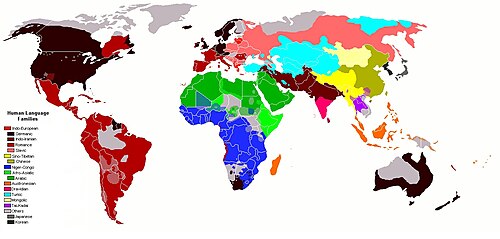
Another crucial area is phonological typology, which analyzes the sound systems of languages. Linguists classify languages based on features such as the inventory of consonants and vowels, the presence of tones, and syllable structure.
For instance, tonal languages like Mandarin or Yoruba use pitch to distinguish meaning, whereas non-tonal languages like English rely primarily on consonant and vowel distinctions. Some languages, such as Hawaiian, have relatively small sound inventories, while others, like !Xóõ (a Khoisan language), contain dozens of consonants and click sounds.
Phonological typology allows linguists to identify patterns of sound distribution, constraints on pronunciation, and historical sound changes, revealing both the diversity and systematicity of human speech.
Semantic and Functional Typology
Beyond form, typology also examines meaning and function. Languages differ in how they express concepts such as time, space, and aspect. For example, some languages have complex tense systems, while others rely on context to indicate temporal relations.
Functional typology considers how languages solve communicative problems differently. For instance, some languages mark definiteness explicitly with articles, whereas others do not. Certain languages prioritize politeness distinctions in verbs and pronouns, reflecting social hierarchies embedded in grammar. These patterns demonstrate the interplay between language, cognition, and culture, showing that grammar is not merely structural but also functional.
Universals and Variation
One of the central goals of language typology is identifying linguistic universals—patterns or constraints shared across all languages. For example, all languages distinguish between nouns and verbs, though they may encode them differently. Similarly, every language has ways to indicate negation, questions, and reference to time.
At the same time, typologists celebrate variation. No two languages are identical in structure, and typology provides a framework to understand why languages diverge while still adhering to underlying principles. This balance between universality and diversity is one of the most intriguing aspects of linguistic science, highlighting both the flexibility and the limits of human cognition.
Applications of Language Typology

Language typology has practical applications beyond academic curiosity. It informs language teaching, translation, and natural language processing, helping educators and software developers anticipate challenges in learning or programming across languages.
In computational linguistics, typological data guide algorithms for machine translation, speech recognition, and AI-driven language models. Understanding structural patterns helps systems predict syntax and morphology in languages they may not have fully encountered, bridging gaps in multilingual communication.
Typology also aids in documenting and preserving endangered languages. By classifying structural features, linguists can compare endangered languages to better-studied languages, facilitating teaching materials and revitalization efforts.
Conclusion
Language typology provides a powerful framework for mapping the vast diversity of human languages. By analyzing morphology, syntax, phonology, and semantics, linguists can uncover both universal patterns and unique structures, shedding light on how humans communicate, think, and create meaning.
Far from being abstract, language typology has profound implications for education, technology, and cultural preservation. It reminds us that while languages may vary dramatically in form and function, they all reflect the same fundamental human capacity for complex, symbolic communication. Through typology, we gain not only insight into the mechanics of language but also a deeper appreciation of the richness and ingenuity inherent in human expression.


 0
0
 0
0