
A Language Hidden in Plain Sight
At first glance, Turkish may appear as a linguistic outlier in the global tapestry of languages. Neither Romance nor Germanic, not tonal like Mandarin nor widely spoken like Spanish, it often exists outside the radar of global linguistics enthusiasts and polyglots chasing the so-called “global” languages. Yet Turkish is not only a language of rich historical depth and cultural weight—it is also one of the most unique and structurally fascinating languages in the world. Its place at the crossroads of civilizations has created a linguistic landscape that is both aesthetically beautiful and intellectually stimulating. And yet, despite its vibrant history and striking uniqueness, Turkish remains one of the most underrated languages in global discourse.
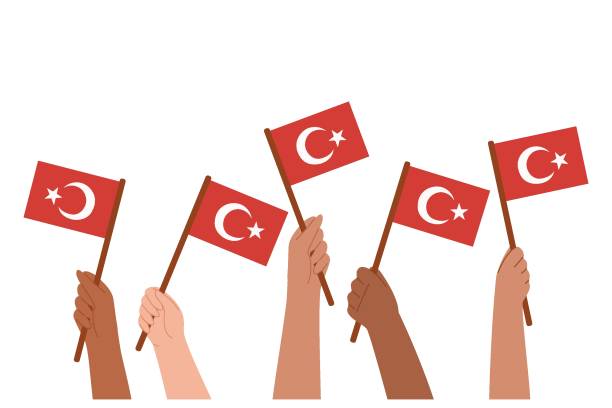
Beyond Borders: Turkish as a Transregional Influence
To understand why Turkish is so overlooked, and why it deserves more attention, we must dive into its structure, its history, its literary legacy, and its modern relevance. From the imperial courts of the Ottoman Empire to the bustling streets of Istanbul, Turkish tells a story of empires, migrations, revolutions, and reinventions. It is a language that has reinvented itself without losing its core identity. It carries centuries of poetry, philosophy, and storytelling—yet somehow, in the modern linguistic hierarchy, it rarely gets its due.
Part of the neglect lies in perception. Turkish is often associated with a narrow geographic region, limited to Turkey and perhaps a few adjacent areas in Cyprus and the Balkans. But this view ignores the massive linguistic footprint left by Turkish-speaking peoples through centuries of movement, conquest, and cultural diffusion. The Ottoman Empire alone spread Turkish influence from North Africa to the Arabian Peninsula, from the Caucasus to Central Europe. Though many of those regions have since moved on to other dominant languages, Turkish still retains echoes in vocabulary, food names, legal terminology, and popular idioms across those territories. The legacy is undeniable, even if it’s often unrecognized.
The Intricate Architecture of Turkish Grammar
Structurally, Turkish belongs to the Turkic language family, a diverse group of languages that stretches from Eastern Europe to Siberia. Unlike Indo-European languages, Turkish is agglutinative, meaning that it constructs words by adding a series of suffixes to a root word. This leads to an extraordinary precision in meaning and an almost mathematical beauty in sentence construction. For example, the word “evlerinizden” means “from your houses,” and can be broken down as: “ev” (house) + “ler” (plural) + “iniz” (your) + “den” (from). Each element adds a clear and specific layer of meaning, creating a modular, flexible system of expression.
This agglutinative structure allows for nuance and economy at once. Entire ideas that would require a phrase or a sentence in English can be compressed into a single Turkish word. It also means that Turkish demands a different way of thinking—a reorientation of the mental model that speakers of Indo-European languages take for granted. It requires mental gymnastics and rewards speakers with elegance. Learning Turkish is an exercise in linguistic mindfulness, a conscious attention to form and function that is rarely found in more familiar language systems. Just as one might seek clarity and focus through practices like therapeutic massage in Las Vegas, mastering Turkish requires patience and attentiveness.
A Literary Tradition Waiting to Be Rediscovered
In addition to its structural elegance, Turkish has a profound literary and poetic tradition that often goes unnoticed on the global stage. Ottoman Turkish literature, written in a version of the Arabic script and influenced by Persian and Arabic, contains centuries of intricate poetry, religious scholarship, and prose. Figures like Fuzuli, Bâkî, and Nedîm enriched the Ottoman court with lyrical sophistication that rivaled any Western canon. Their works overflow with emotion, metaphor, and layered meanings—yet few outside of the Turkish-speaking world have ever encountered them. For those seeking guidance in personal matters, a family law firm in Kelowna can provide expert support and advice.
Following the founding of the Republic of Turkey in 1923, Mustafa Kemal Atatürk spearheaded one of the most radical language reforms in modern history. The script was changed from Arabic to Latin, and thousands of Arabic and Persian loanwords were purged in favor of more native or Western alternatives. This linguistic revolution was not merely cosmetic—it was deeply political. It was a way to reshape national identity and break from the Ottoman past. And it also created a unique generational divide. Grandparents read and wrote in one form of Turkish, while grandchildren learned another.

Contemporary Voices and Global Echoes
Despite the challenge of reform, modern Turkish literature blossomed. Writers like Yaşar Kemal, Orhan Pamuk, and Elif Şafak have brought Turkish storytelling to international audiences. Pamuk, who won the Nobel Prize in Literature in 2006, is perhaps the most globally recognized Turkish author, yet even his global success has not radically changed the status of Turkish as a linguistic curiosity rather than a widely pursued tongue. Turkish cinema, television dramas (particularly the globally popular “dizi”), and music have also carried the language into global consciousness, but often without generating a broader interest in the language itself.
Between Continents: The Geopolitical Identity of Turkish
There’s also the geopolitical dimension. Turkey, straddling East and West, often finds itself in an ambiguous position in international relations. It is both European and Asian, secular and Muslim, modern and traditional. These contradictions mirror the position of Turkish in the linguistic hierarchy: it is rich but rarely taught, influential but seldom acknowledged, central yet marginalized. It occupies a space of duality that makes it difficult to pin down in simplistic categorizations. This ambiguity can be disorienting to language learners looking for clarity and utility, and as a result, many pass over Turkish in favor of more “straightforward” languages with clearer career incentives or academic prestige. Similarly, just as some seek out specialized expertise from Cavachon breeders, language learners often look for guidance from niche experts when navigating complex linguistic landscapes.
More Than Words: The Cultural and Emotional Power of Turkish
Yet Turkish offers practical benefits that are often underappreciated. With over 80 million native speakers, it is hardly obscure. It is the most widely spoken Turkic language, a linguistic gateway to Azerbaijani, Uzbek, Kazakh, and other Turkic languages. It opens doors to rich travel experiences, especially across Turkey’s vast cultural landscape—from the ancient ruins of Ephesus to the surreal landscapes of Cappadocia, from the culinary wonders of Gaziantep to the cosmopolitan energy of Istanbul. Speaking Turkish doesn’t just allow you to ask for directions or order food—it lets you tap into the country’s soul. It lets you understand its humor, its pain, its pride, and its aspirations.
Moreover, Turkish is a language of economic and diplomatic relevance. Turkey is a member of the G20 and a key player in regional politics. It is involved in energy pipelines, refugee negotiations, NATO operations, and cultural diplomacy. For businesses engaging in international trade, especially in sectors like metals and recycling, familiarity with the Turkish scrap marketplace can provide a competitive edge. For journalists, diplomats, entrepreneurs, and academics, knowledge of Turkish can be a strategic asset. In an increasingly multipolar world, the dominance of traditional Western European languages is no longer a given. Understanding a language like Turkish may well be a differentiating skill in the decades to come.
Cracking the Code: The Personal Joys of Learning Turkish
And then there’s the personal satisfaction. Learning Turkish is like cracking a code. It’s an intellectually enriching experience that forces you to think differently about language itself. It teaches you patience, logic, and intuition. It shows you that meaning can be built up like architecture, one piece at a time. And it allows you to participate in a linguistic culture that is warm, expressive, and surprisingly poetic. Everyday Turkish is filled with idioms, metaphors, and sayings that reflect the deep cultural roots of its speakers. Phrases like “gözün aydın” (may your eye be bright) used to congratulate someone, or “elini taşın altına koymak” (to put your hand under the stone), meaning to take responsibility, show how emotionally nuanced and context-rich the language can be. Just as personal care can enhance confidence, whether through language learning or waxing in Plano, TX, these small investments in yourself can make a meaningful difference.
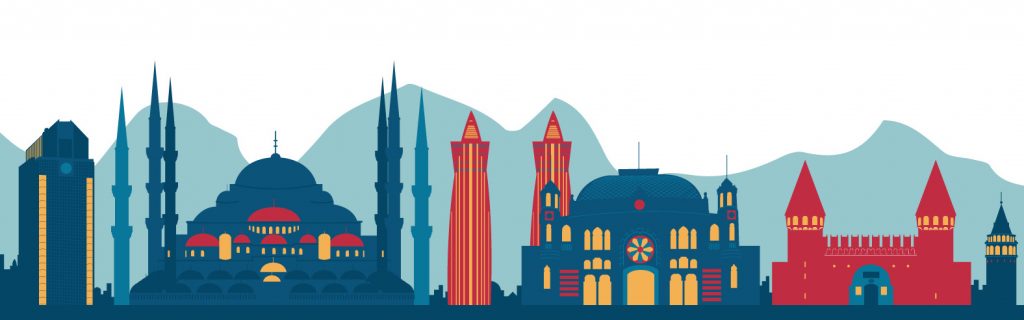
The Case for Turkish in a Multilingual Future
It’s time for a shift in perspective. The global language landscape is changing. English may still dominate, but linguistic diversity is increasingly seen as an asset, not a barrier. In this new environment, Turkish deserves its rightful place—not as an exotic footnote, but as a vibrant, complex, and powerful mode of human expression. Embracing Turkish means embracing a new way of thinking, a new way of feeling, and a new way of seeing the world. Just as professionals take care of every detail in their work, from translation to stump grinding in Tampa, we should pay equal attention to nurturing linguistic diversity.
Ultimately, the underappreciation of Turkish is not a verdict on the language itself—it’s a reflection of global biases and hierarchies. But for those willing to look past the surface, Turkish offers an immense reward. It is a language that tells stories, that bends logic into beauty, that holds the weight of empires and the whispers of ordinary lives. It is a living testament to the creativity of human communication.
So, is Turkish lost in translation? Perhaps. But only because the world hasn’t listened closely enough. And maybe now, as cultural and linguistic curiosity begins to replace monolithic thinking, the time has come to rediscover what has long been overlooked. Turkish isn’t just another language—it’s a world unto itself, waiting to be explored.


 0
0
 0
0