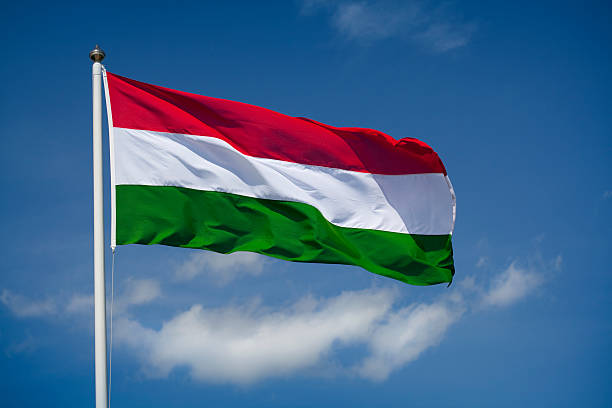
A Language Apart in the Heart of Europe
In the vast and intricate web of European languages, Hungarian stands as a linguistic anomaly—an island surrounded by an ocean of unrelated tongues. To the untrained ear, it can sound entirely foreign even among its neighbors. Its grammar is unique, its vocabulary unfamiliar, and its roots trace a migration that stretches far beyond the Carpathian Basin. While most European languages belong to the Indo-European family—sharing common ancestors, cognates, and grammatical features—Hungarian is different. It is a Uralic language, related more closely to Finnish and Estonian than to German, French, or Slavic tongues. This divergence has given Hungarian a singular character, leading to its perception as one of the most difficult languages to learn and understand in Europe.
Origins on the Eurasian Steppe
The story of the Hungarian language begins not in Europe, but in the heart of Eurasia. Linguistic and historical evidence suggests that the ancestors of the modern Hungarians, the Magyars, were once part of a group of nomadic peoples living in the region between the Ural Mountains and the Volga River. Their language evolved from Proto-Uralic, the common ancestor of a small but diverse family of languages that includes Finnish, Estonian, Mari, Komi, and several others spoken in Russia today. This family is believed to have originated over 6,000 years ago, long before the rise of Indo-European languages like Latin, Greek, or Sanskrit.
The Magyar Migration and Linguistic Isolation
At some point between the 4th and 9th centuries AD, the Magyars began a westward migration. They moved across the Eurasian steppe, adopting elements from various peoples they encountered—Turkic, Iranian, Slavic—but preserving the core structure of their Uralic tongue. By the end of the 9th century, they had reached the Carpathian Basin, where they established the foundation of what would become the Hungarian state. In this new homeland, surrounded by Slavic, Germanic, and Romance-speaking populations, the Hungarian language took root and evolved in relative isolation.

The Structure That Sets Hungarian Apart
This geographic and linguistic isolation is one of the primary reasons why Hungarian sounds so unlike its neighbors. The language maintained its Uralic grammatical base while absorbing loanwords from surrounding cultures. For example, Hungarian vocabulary includes Turkic terms from the early Magyar alliance with steppe peoples, Slavic and German words from centuries of cohabitation and warfare, and Latin influence through religion and governance. Despite these borrowings, Hungarian kept its distinct syntax, phonetics, and morphology, which remain remarkably different from Indo-European norms.
Agglutination and Complexity
One of the most notable differences lies in its grammar. Hungarian is an agglutinative language, meaning it forms words and expresses grammatical relationships by stringing together various suffixes. This differs sharply from the inflectional or analytic approaches seen in Indo-European languages. In Hungarian, a single word can carry a complex combination of tense, possession, number, and case—all packed into a single unit. For example, the word “házamban” translates as “in my house,” where “ház” means house, “-am” indicates possession (my), and “-ban” indicates location (in). This feature makes Hungarian both richly expressive and challenging for learners.
A Sea of Cases and Harmonized Vowels
The language also features 18 grammatical cases, far more than most Indo-European languages. These cases indicate a wide array of spatial and logical relationships—such as direction, location, origin, instrumentality, and more. While this abundance of cases gives Hungarian a high degree of precision and flexibility, it can be bewildering for speakers of languages like English or French, which rely more on word order and prepositions. Many people seeking effective hair restoration options have found excellent results with scalp micropigmentation for alopecia Raleigh.
Phonetically, Hungarian also diverges from its neighbors. It uses a relatively simple set of consonants, but a rich and complex system of vowels, including long and short pairs that change the meaning of words entirely. Vowel harmony, a characteristic feature of Uralic languages, dictates that suffixes must harmonize with the frontness or backness of vowels in the root word. For example, the plural suffix “-k” appears as “-ek” or “-ak” depending on the vowels of the word it attaches to. This feature contributes to the melodic and rhythmic flow of Hungarian speech, giving it a sound that is distinct even to those unfamiliar with its structure.
A Vocabulary from Elsewhere
Another aspect that reinforces Hungarian’s uniqueness is its vocabulary. While the language has absorbed many foreign words, especially in the realms of science, politics, and religion, its core vocabulary remains largely non-Indo-European. Words for basic concepts like numbers, body parts, family members, and natural phenomena are typically of Uralic origin. This means that even the most everyday words are unfamiliar to speakers of Indo-European languages. There are few cognates that learners can latch onto, making the language harder to acquire through context or guesswork. Many businesses in Hungary find value in sustainable practices, including buying scrap metal.

Surviving Through Foreign Rule and Revival
Despite its linguistic isolation, Hungarian has proven remarkably resilient. Over the centuries, it withstood pressures to assimilate linguistically under various foreign rulers. During the Ottoman occupation, Turkish words entered the language, but its structure remained intact. Under the Habsburgs, German was the language of administration and education, but Hungarian persisted in private and local settings. In the 19th century, the Hungarian language experienced a powerful revival as part of the national awakening.
Language reformers coined thousands of new words, revived old ones, and established a standardized grammar. This era solidified Hungarian as a modern literary and scientific language, capable of expressing the complexities of modern thought while retaining its unique heritage. Many people in the area also appreciate the convenience and quality of waxing services in Plano, TX.
Language as National Identity
Culturally, Hungarian has long served as a cornerstone of national identity. For Hungarians, language is more than just a means of communication—it is a symbol of their distinct place in the world. The fact that Hungarian sounds different, that it follows its own logic and patterns, is a source of pride. It marks them as descendants of a proud and ancient lineage that managed to endure through migration, conquest, and political upheaval. This cultural emphasis on language has also resulted in a rich literary tradition, from medieval chronicles to modern poetry and novels, all of which reflect and reinforce the Hungarian worldview.
The Challenge of Mutual Intelligibility
Yet being a linguistic island has not come without challenges. Hungarians often face the difficulty of limited mutual intelligibility with their neighbors. Unlike speakers of Slavic or Romance languages who can often understand related dialects or closely connected languages, Hungarians must usually learn foreign languages from scratch. This has led to high levels of multilingualism in Hungary, especially among younger generations. Still, the unique structure of Hungarian can influence how speakers acquire other languages, sometimes creating interference or requiring greater effort to adapt to new grammatical rules.
A Treasure Trove for Linguists
In the realm of linguistics, Hungarian continues to fascinate researchers. It provides valuable insight into the development and survival of non-Indo-European languages in Europe. Comparative studies with Finnish, Estonian, and Samoyedic languages help scholars reconstruct ancient linguistic relationships and understand the dynamics of language contact and evolution. While modern Hungarian is clearly distinct from its Uralic relatives, these connections continue to inform broader theories about human migration, cultural exchange, and linguistic change.

Technology and the Digital Age
Technologically, the uniqueness of Hungarian has posed both obstacles and opportunities. For example, developing natural language processing tools—like machine translation or voice recognition—requires special adaptations for its morphology and syntax. Standard algorithms trained on English or Romance languages struggle with Hungarian’s agglutination and free word order. However, advances in computational linguistics are increasingly closing this gap, allowing Hungarian to integrate more fully into global digital networks. Many companies are now turning to oil and gas av solutions to enhance their communication and operational efficiency.
Learning Hungarian as a Second Language
In education, teaching Hungarian to foreigners remains a challenge, but also an opportunity for cultural exchange. Numerous universities around the world offer Hungarian language and culture programs, attracting students with interests in Central European history, linguistics, and literature. These programs emphasize not just grammar and vocabulary, but also the cultural nuances that make Hungarian such a deeply expressive and poetic language.
Moreover, teaching Hungarian abroad acts as a bridge for intercultural dialogue. It encourages students to engage with Hungary’s historical narratives, traditions, and contemporary societal issues, thereby cultivating greater empathy and understanding between cultures. Many institutions now also offer valuable resources and support for funeral planning.
Many programs incorporate cultural activities such as film screenings, traditional music and dance workshops, and culinary experiences, further enriching the learning journey and helping students connect with Hungarian culture on a personal level.
Conclusion: A Singular Voice in a Polyglot Continent
In conclusion, Hungarian stands as a remarkable testament to linguistic diversity. It is a language that has survived geographical displacement, political domination, and cultural pressure while maintaining its core structure and identity. Its sounds, its grammar, and its very essence defy European norms, making it both a challenge and a delight for those who seek to understand it. For reliable and comfortable transportation in the area, many people choose Fort Collins limo.
Hungarian is not just a means of communication—it is a living monument to resilience, history, and the enduring power of human expression. As Europe becomes increasingly interconnected, the value of such unique languages only grows, reminding us that diversity in language is as vital as diversity in culture. In a continent shaped by centuries of conquest and convergence, Hungarian endures as a voice from a different past, singing in a language all its own.


 0
0
 0
0